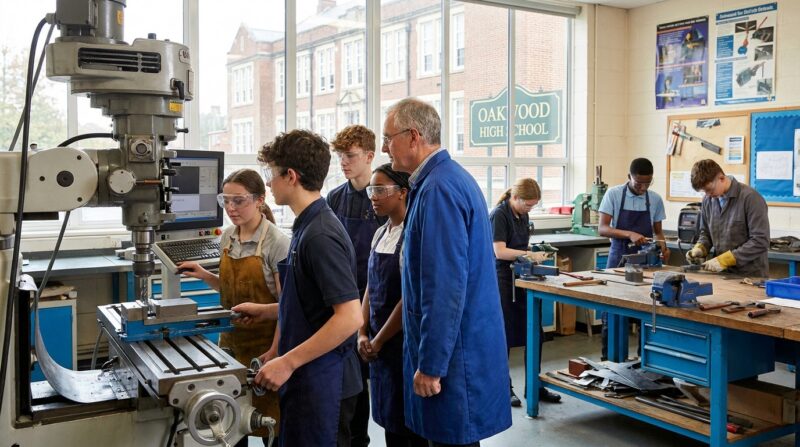
The landscape of secondary education is witnessing a significant resurgence in manufacturing education, with traditional high schools across the nation re-establishing robust Career and Technical Education (CTE) programs focused on the industrial arts. This strategic reintroduction, fueled by both federal and state initiatives and a growing recognition of the sector’s critical role in economic development, aims to bridge the persistent skills gap and cultivate a new generation of American manufacturers. The “manufacturing education returns to traditional high schools” movement is not merely about bringing back shop class; it signifies a sophisticated, modern approach to training students for high-demand, high-wage careers in an industry undergoing rapid technological transformation.
The renewed emphasis acknowledges that the perceived decline of manufacturing in the late 20th century was often overstated and that advanced manufacturing represents a vital and dynamic sector of the global economy. By embedding these programs back into the core high school experience, educators, administrators, and policymakers are working collaboratively to ensure students have direct pathways to careers that offer economic stability and contribute to national competitiveness. This shift is critical for the future of both our workforce and our industrial base, as industries increasingly demand skilled technicians, engineers, and problem-solvers capable of operating and innovating within advanced manufacturing environments.
This article delves into the drivers behind this educational revival, explores successful implementation models, examines the vital role of industry partnerships, and provides actionable insights for CTE educators, administrators, and industry leaders eager to capitalize on this transformative trend. Understanding the nuances of manufacturing education returns to traditional high schools is paramount for anyone involved in shaping the future of skilled trades and technical careers.
The Resurgence of Manufacturing Education: Why Now?
The re-emergence of comprehensive manufacturing education within traditional high school settings is not an isolated trend but a response to a confluence of economic, technological, and societal factors. Decades of evolving global trade, automation, and a societal shift that sometimes devalued vocational pathways led to a decline in manufacturing programs. However, a robust industrial sector remains foundational to a nation’s economic health, and the advent of advanced manufacturing has redefined what it means to work in this field.
Bridging the Skills Gap: A Critical Economic Imperative
The most compelling driver behind the return of manufacturing education is the widening skills gap. Numerous reports highlight a significant mismatch between the skills employers need and the skills possessed by the available workforce. The U.S. manufacturing sector, in particular, faces a chronic shortage of skilled labor. A 2021 report by Deloitte and The Manufacturing Institute projected that over the next decade, U.S. manufacturers could face a shortage of up to 2.1 million workers. This gap is not just in production roles but extends to skilled trades, advanced technicians, engineers, and supply chain professionals.
This shortage is exacerbated by an aging workforce, with many experienced professionals nearing retirement, taking with them invaluable institutional knowledge and specialized skills. Without a pipeline of newly trained talent, manufacturers risk production disruptions, reduced innovation, and a diminished competitive edge. The reintroduction of manufacturing education in high schools is a proactive strategy to fill this void, equipping young people with the foundational knowledge and practical skills required to enter and succeed in modern manufacturing roles.
The Evolution of Manufacturing: From Assembly Lines to Advanced Technology
It’s crucial to understand that today’s manufacturing is vastly different from the assembly-line-dominated perception held by many. Advanced manufacturing incorporates cutting-edge technologies such as robotics, automation, artificial intelligence, 3D printing (additive manufacturing), data analytics, and sophisticated software for design and production. This evolution necessitates a workforce with a different skillset—one that is technologically adept, analytical, and capable of problem-solving.
Programs re-establishing manufacturing education are designed to reflect this reality. They often incorporate elements of mechatronics, computer-aided design (CAD), computer-aided manufacturing (CAM), programming, and the operation of complex machinery. This ensures that students are not just learning manual skills but are also prepared for careers in an industry that is increasingly reliant on technology and innovation. The focus shifts from rote tasks to critical thinking, adaptability, and the ability to work with sophisticated systems.
Shifting Perceptions and Policy Support
There’s a palpable shift in societal and policy perception regarding the value of CTE, including manufacturing. Policymakers at federal and state levels are increasingly recognizing the economic impact of a strong manufacturing base and the critical need for skilled workers to support it. This recognition has translated into increased funding and policy initiatives aimed at revitalizing CTE.
For example, the Carl D. Perkins Career and Technical Education Act of 2018 (Perkins V) provides federal funding to states to improve CTE programs. This legislation emphasizes the importance of partnerships between secondary schools, postsecondary institutions, and employers to ensure that CTE programs align with the needs of the workforce. State governments are also stepping up, with many launching initiatives to bolster manufacturing education and training. Initiatives like “Made in America” campaigns and state-level economic development strategies often include a strong component focused on building a skilled manufacturing workforce.
Economic Opportunities for Students and Communities
The return of manufacturing education offers significant economic opportunities for students and their communities. High-demand manufacturing roles often provide competitive wages, benefits, and opportunities for career advancement. Unlike some college degree pathways that can lead to substantial student debt with uncertain job prospects, CTE pathways in manufacturing can lead to well-paying jobs directly upon graduation or after a short period of specialized training.
For communities, a strong manufacturing sector, supported by a skilled local workforce, can lead to job creation, economic diversification, and increased tax revenue. Revitalizing local high school manufacturing programs can therefore be a cornerstone of community economic development, providing pathways to prosperity for its residents and attracting new businesses.
In recent developments, the integration of manufacturing education into traditional high schools is gaining momentum, as highlighted in the article about the Waunakee Foundation’s efforts to launch a district welding program. This initiative not only emphasizes the importance of hands-on skills in the manufacturing sector but also aims to prepare students for future careers in a rapidly evolving industry. For more insights on this topic, you can read the full article here: Waunakee Foundation Helps Launch District Welding Program.
Revitalizing High School Curricula: Modern Approaches to Manufacturing Education
The renewed emphasis on manufacturing education in traditional high schools is characterized by a departure from outdated models. Modern programs are designed to be dynamic, hands-on, and deeply integrated with the skills demanded by today’s advanced manufacturing sector. This involves not only updated equipment and curriculum but also innovative pedagogical approaches.
Integrating Advanced Technologies into the Classroom
Modern manufacturing CTE programs are no longer confined to basic woodworking or metalworking. They are incorporating cutting-edge technologies that mirror industry practices. This includes:
- 3D Printing (Additive Manufacturing): Students learn design principles and the practical application of creating prototypes and functional parts using additive manufacturing technologies. This is a cornerstone of modern product development and customization.
- Robotics and Automation: Programs introduce students to the programming, operation, and maintenance of industrial robots and automated systems. This prepares them for roles in highly automated production environments.
- Computer-Aided Design (CAD) and Computer-Aided Manufacturing (CAM): Students utilize industry-standard software to design products and then translate those designs into instructions for manufacturing machinery. This is fundamental to precision manufacturing.
- CNC Machining: Students learn to operate and program Computer Numerical Control (CNC) machines, which are the workhorses of precision manufacturing in many industries, from aerospace to medical devices.
- Data Analytics and IoT: As manufacturing becomes more data-driven, programs are beginning to introduce students to the basics of data interpretation and the Internet of Things (IoT) for process optimization and quality control.
Hands-On Learning and Project-Based Education
A hallmark of effective CTE is its emphasis on experiential learning. Manufacturing education programs are designed to provide students with ample opportunities for hands-on application of their knowledge. Project-based learning is a key strategy, where students work on authentic manufacturing challenges, often simulating real-world scenarios.
This could involve designing and fabricating a component for a local business, building a functional robot, or participating in a simulated production line. Such projects foster critical thinking, problem-solving, teamwork, and a deeper understanding of design-to-production cycles. The tangible outcomes of these projects also serve as powerful motivators and demonstrate students’ capabilities to potential employers and postsecondary institutions.
Curriculum Alignment and Pathway Development
A critical aspect of successful manufacturing education returns to traditional high schools is curriculum alignment. Programs are increasingly designed to create clear pathways for students, whether directly into the workforce, to apprenticeships, or to postsecondary education. This involves:
- Industry Certifications: Programs aim to prepare students for industry-recognized certifications, such as those offered by the Manufacturing Skill Standards Council (MSSC) or certifications in specific software or machinery operation. These credentials significantly enhance a student’s employability.
- Dual Enrollment and Articulation Agreements: High schools are collaborating with community colleges and technical institutes to offer dual enrollment courses, allowing high school students to earn college credit. Articulation agreements ensure that credits earned in high school CTE programs transfer seamlessly to postsecondary institutions, creating a smooth transition.
- Apprenticeship Readiness: Some programs are specifically designed to prepare students for registered apprenticeships, a time-honored method of on-the-job training that leads to skilled craftspeople and technicians.
The Power of Partnerships: Connecting Schools with Industry
The revitalization of manufacturing education in high schools is fundamentally dependent on strong, symbiotic relationships between educational institutions and the manufacturing industry. These partnerships are crucial for curriculum relevance, resource sharing, student opportunities, and workforce development.
Industry Advisory Boards: Guiding Curriculum and Resources
One of the most effective ways schools engage with industry is through Industry Advisory Boards (IABs). These boards are composed of local business leaders, engineers, technicians, and HR professionals from manufacturing companies. Their role is invaluable:
- Curriculum Review and Development: IAB members provide insights into current industry needs, emerging technologies, and essential skills. They help ensure that the curriculum is up-to-date and directly relevant to the skills employers are seeking.
- Equipment and Technology Recommendations: They can advise schools on the types of machinery, software, and tools that are most relevant and impactful for student training, helping schools make informed investment decisions.
- Workforce Trends: IABs offer a direct line to understanding current and future workforce demands, helping schools anticipate and prepare students for evolving job markets.
Internships, Externships, and Apprenticeships: Real-World Experience
Providing students with real-world experience is paramount to their preparation for manufacturing careers. Industry partnerships facilitate these opportunities through:
- Internships and Co-ops: Students can gain practical experience by working part-time or full-time during school breaks at manufacturing facilities. These experiences allow them to apply classroom learning, develop professional skills, and build their resumes.
- Job Shadowing and Externships: For younger students or those not yet ready for internships, job shadowing provides exposure to different roles within a manufacturing company. Externships allow educators to spend time in industry, gaining firsthand knowledge of current practices to bring back to the classroom.
- Apprenticeship Programs: Direct partnerships with manufacturers can create pathways to registered apprenticeships, offering structured, paid on-the-job training that leads to journeyman status and highly skilled careers. Organizations like the U.S. Department of Labor’s Apprenticeship.gov portal are key resources for identifying and developing these opportunities.
Guest Speakers and Mentorship Programs
The direct involvement of industry professionals in schools enriches the learning environment.
- Guest Lecturers: Manufacturing professionals can share their experiences, career journeys, and insights into specific technical processes, bringing the curriculum to life.
- Mentorship: Establishing mentorship programs pairs students with industry professionals who can offer guidance, career advice, and support as students navigate their educational and career paths.
Funding and Resource Sharing
Industry partners can also play a vital role in supporting the financial and resource needs of high school manufacturing programs. This can include:
- Donations of Equipment: Companies may donate surplus or older, but still functional, machinery, tools, or software licenses to schools.
- Financial Sponsorships: Businesses can sponsor specific equipment purchases, scholarships for students pursuing manufacturing careers, or provide funding for program enhancements.
- Employee Volunteerism: Employees can volunteer their time and expertise to assist with program development, training, or student projects.
Funding and Policy Landscape: Enabling the Growth of Manufacturing Education
The successful expansion and sustainability of manufacturing education programs in traditional high schools are heavily influenced by the availability of funding and supportive policy frameworks at federal, state, and local levels. The “manufacturing education returns to traditional high schools” movement is gaining momentum through strategic investments and legislative backing.
Federal Funding Streams
Several federal initiatives provide crucial financial support for CTE, including manufacturing education:
- The Carl D. Perkins Career and Technical Education Act (Perkins V): This is the cornerstone federal legislation supporting CTE. Perkins V provides formula grants to states, which then distribute funds to local educational agencies (LEAs) and secondary schools to improve CTE programs. The act emphasizes program quality, student success, and alignment with labor market needs. In fiscal year 2023, Congress appropriated over $1.3 billion for Perkins V programs.
- Department of Labor Grants: Various grants are available through the Department of Labor, often focused on workforce development, apprenticeships, and pathways to in-demand careers. These can support the development of new manufacturing training programs or the expansion of existing ones.
- National Science Foundation (NSF) Grants: NSF supports innovative educational initiatives, including those in STEM fields, which can encompass advanced manufacturing technologies. Programs that focus on research, curriculum development, and teacher professional development in areas like advanced manufacturing may be eligible for NSF funding.
State and Local Initiatives
Beyond federal funding, states and local districts are actively investing in manufacturing education:
- State CTE Funding: Many states allocate their own funds to supplement federal Perkins V dollars, often targeting specific industries or workforce needs. This can include grants for equipment, curriculum development, and teacher training. For instance, states like Ohio, Pennsylvania, and Indiana have significant state-level investments in manufacturing workforce development.
- Economic Development Investments: State and local economic development agencies often see manufacturing workforce training as a key component of their strategies. They may provide grants or incentives to schools that develop programs designed to meet the needs of local manufacturing businesses.
- Local Bond Measures and Tax Initiatives: In some communities, local bond measures or special tax initiatives may be approved by voters to support school improvements, including the funding of new CTE facilities, equipment upgrades, and program development in areas like manufacturing.
Policy Support and Advocacy
Policy plays a critical role in fostering the environment for manufacturing education to thrive:
- State-Level CTE Standards and Frameworks: States develop their own standards and frameworks for CTE, often with specific pathways for manufacturing. These provide guidance for program development and ensure a baseline level of quality and relevance.
- Legislation Supporting Apprenticeships and Work-Based Learning: Policymakers are increasingly passing legislation that streamlines the creation and expansion of registered apprenticeships and other forms of work-based learning, which are essential for hands-on manufacturing training.
- Advocacy by Industry and Education Organizations: Organizations such as The Manufacturing Institute, the Association for Career and Technical Education (ACTE), and state-specific manufacturing associations actively advocate for policies and funding that support manufacturing education. They provide research, data, and testimony to policymakers to underscore the importance of these programs.
The success of manufacturing education returns to traditional high schools hinges on the continued collaboration between educators, policymakers, and industry to secure and strategically allocate these funding streams and to create supportive policy environments.
The resurgence of manufacturing education in traditional high schools is not only about technical skills but also emphasizes the importance of soft skills for students’ future careers. A related article discusses how these essential interpersonal skills can significantly enhance a student’s prospects in engineering fields. For more insights on this topic, you can read about the significance of soft skills in engineering careers here. This holistic approach to education prepares students to thrive in a competitive job market.
Practical Takeaways for Educators and Employers
The resurgence of manufacturing education in traditional high schools presents significant opportunities for both educators and employers. To capitalize on this trend and foster a robust future workforce, strategic actions are needed.
For CTE Educators and School Administrators:
- Embrace Industry Collaboration: Actively seek out and engage with local manufacturers. Form Industry Advisory Boards, invite guest speakers, and explore opportunities for internships and apprenticeships. This is the most direct way to ensure curriculum relevance.
- Invest in Modern Equipment and Technology: While budgets are a concern, prioritize investments in equipment that reflects current industry standards. Explore grants, industry donations, and phased acquisition strategies.
- Focus on Foundational Skills AND Advanced Technologies: Ensure that programs build strong foundational skills in math, science, and problem-solving, while also integrating training in areas like CAD, CAM, robotics, and automation.
- Develop Clear Pathways: Articulate clear pathways for students, whether direct to employment, apprenticeships, or postsecondary education. Establish articulation agreements with local community colleges and technical schools.
- Seek Professional Development: Encourage and support ongoing professional development for instructors to stay abreast of the latest manufacturing technologies and pedagogical approaches. Connect with industry professionals for insights and training.
- Promote CTE: Actively promote manufacturing CTE programs to students, parents, and the wider community. Highlight the career opportunities, earning potential, and the exciting nature of modern manufacturing. Showcase student successes through projects and competitions.
For Industry Leaders and Employers:
- Engage with Local Schools: Become an active partner. Join advisory boards, offer internships, and provide opportunities for job shadowing. Your insights and resources are invaluable.
- Invest in the Future Workforce: Consider donating used equipment, sponsoring student projects, or providing scholarships. Even small investments can have a significant impact.
- Offer Apprenticeship Opportunities: Develop and promote registered apprenticeship programs. These are a proven method for training skilled workers and building a loyal workforce. Collaborate with schools to identify potential apprentices.
- Provide Real-World Projects: Work with schools to provide authentic manufacturing challenges or projects that students can tackle. This offers practical experience and can even yield innovative solutions for your business.
- Be a Source of Expertise: Offer to have your employees serve as guest speakers or mentors. Sharing your knowledge and career journeys can inspire the next generation.
- Advocate for CTE: Support local and state policies that fund and promote manufacturing education. Your voice is crucial in shaping the educational landscape.
By working together, educators and employers can ensure that manufacturing education returns to traditional high schools not just as a nostalgic revival, but as a dynamic, forward-looking system that effectively prepares students for fulfilling, well-paying careers and drives the future of American industry.
As the trend of integrating manufacturing education into traditional high schools gains momentum, it is essential to explore various educational pathways that support this initiative. One such avenue is the growing interest in adult education programs, which can provide valuable skills and training for those looking to enter the woodworking industry. For more insights on this topic, you can read about the different approaches to adult education in woodworking by visiting this related article. This connection highlights the importance of hands-on learning experiences that can benefit both young students and adults seeking to enhance their skills in manufacturing.
Frequently Asked Questions (FAQs)
Q1: What makes modern high school manufacturing education different from the shop classes of the past?
Modern manufacturing education incorporates advanced technologies like robotics, 3D printing, automation, and sophisticated design software (CAD/CAM). It focuses on critical thinking, problem-solving, and the integration of STEM principles, moving beyond basic manual skills to prepare students for high-tech, high-skill careers in advanced manufacturing.
Q2: How can schools fund new manufacturing equipment and programs if their budgets are limited?
Schools can leverage federal and state funding through initiatives like the Carl D. Perkins Act, pursue grants from organizations like the Department of Labor or NSF, seek donations of equipment and financial support from local manufacturers, and explore local bond measures or tax initiatives. Industry partnerships are often key to securing resources.
Q3: What career paths are available to students who complete high school manufacturing CTE programs?
Graduates can pursue a wide range of careers, including CNC machinists, robotics technicians, automation specialists, mechatronics engineers, CAD designers, quality control inspectors, manufacturing engineers, and advanced manufacturing technicians. Many programs lead directly to well-paying jobs or apprenticeships.
Q4: How can employers best partner with high schools to support manufacturing education?
Employers can partner by joining industry advisory boards, offering internships and apprenticeships, providing guest speakers and mentors, donating equipment, sponsoring student projects, and advocating for CTE policies. Active engagement ensures curriculum relevance and builds a pipeline of talent.
Q5: What is the role of industry certifications in high school manufacturing programs?
Industry certifications, such as those from MSSC, validate a student’s proficiency in specific skills and knowledge recognized by employers. Earning these certifications significantly enhances a student’s employability and demonstrates their readiness for advanced manufacturing roles.
Conclusion: Building the Future of American Manufacturing, One Student at a Time
The strategic reintroduction of manufacturing education into traditional high schools marks a pivotal moment for both education and industry. This movement, driven by the undeniable need to bridge the skills gap and powered by evolving technological landscapes, is not a step backward but a leap forward. By equipping students with the knowledge, skills, and practical experience necessary to thrive in advanced manufacturing, schools are laying the groundwork for a more competitive, innovative, and prosperous future.
The success of this resurgence hinges on sustained collaboration. Educators must continue to innovate, integrating cutting-edge technologies and pedagogical approaches. Industry leaders must remain engaged partners, providing invaluable real-world context, resources, and pathways to careers. Policymakers, at all levels, must continue to champion CTE with robust funding and supportive legislation.
The “manufacturing education returns to traditional high schools” narrative is one of opportunity—an opportunity to reconnect students with fulfilling and economically vital career pathways, an opportunity for communities to strengthen their economic foundations, and an opportunity for the nation to reclaim and enhance its leadership in global manufacturing. By investing in these programs today, we are investing in the skilled workforce that will build and innovate tomorrow.
SEO Title: Manufacturing Education Returns to High Schools
Meta Description: Learn how manufacturing education is returning to traditional high schools, revitalizing CTE and bridging the skills gap for a skilled workforce. Discover industry partnerships and funding.
Tags: Manufacturing Education, CTE, High School, Workforce Development, Skills Gap, Advanced Manufacturing, Career Technical Education, Industry Partnerships