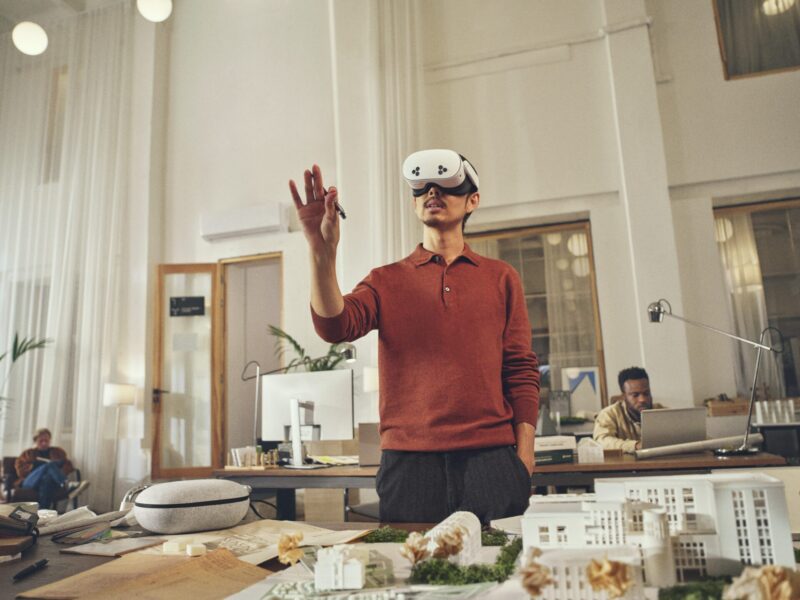
Higher education is embracing XR solutions to deliver faster, smarter, and more engaging workforce development programs.
XR Workforce Development in Higher Education Gains Momentum
Technology advocates love to talk about the vital need for continuous change, and they’re not wrong. But while technologies come and go, the mission of higher education remains the same: to prepare learners to succeed at whatever comes next, whether it’s pursuing more education or entering the workforce.
However, as workforce and employment dynamics change, learners need nontraditional avenues to master new skills and competencies. Today’s job seekers are stuck between old expectations and new realities, and colleges and universities are revisiting how their missions can be honored as the educational model changes.
This article looks at how extended reality (XR) (which includes augmented reality [AR] and virtual reality [VR]) solutions give both learners and institutions a dynamic path forward.
Navigating a Double-Sided Technology Disruption
Much has been written about how artificial intelligence (AI) has disrupted today’s job market and its role in reshaping the future of work. At the same time, AI is also amplifying other emerging technologies that provide students with the skills and competencies they need to thrive. XR solutions, now enhanced by AI, are transforming education by creating more adaptive, immersive, and personalized learning experiences. These advancements enable learners to practice real-world skills, explore career pathways, and build confidence in ways that traditional classrooms cannot.
- XR experiences are helping students explore and prepare for the careers of the future through engaging, immersive, simulation-driven learning.
- Institutions are using XR to anchor a new generation of workforce- and skills-development programs that both learners and employers are clamoring for.
This evolution will ultimately help both institutions and communities to thrive. Learners will acquire the skills and expertise they need, and colleges and universities will deliver on their missions while expanding their engagement models.
Why is the moment so critical?
The rise of XR in workforce and skills development comes at exactly the right moment, given that technological uncertainty drives both worry and excitement about the future of postsecondary education and everything that comes after.
- Employers worry about finding the right talent with the right skills to drive the future growth of their businesses.
- Students graduating from school and entering the job market also face uncertainty, especially with all the noise and negativity about careers being decimated by AI and automation.
- Inside the workforce, employees are anxious about staying relevant and advancing in their careers.
In a recent Harris Poll sponsored by the University of Phoenix, 73 percent of HR leaders indicated closing skill gaps was a priority, and research shows that employees are feeling the same need.Footnote1 There are good jobs out there, but what will it take to get them?
Diverging Paths for Learners
The Georgetown University Center on Education and the Workforce 2024 report, The Future of Good Jobs: Projections through 2031, paints a clear picture, defining a “good job” as one paying at least $43,000 for younger workers (aged 25–44), with an overall median salary of $82,000 for workers between the ages of 25 and 64.Footnote2
One-third of these roles will be managerial and professional. The rest will be in construction, industrial production, technical health care roles, public safety, and skilled trades. The report projects the following:
- “Good jobs” will grow to 87.8 million, up 21 percent over 2021.
- Eighty-five percent of these jobs will require postsecondary training or education.
The second bullet point above is important, but here’s an even more significant shift: A lot of good jobs exist for middle-skill workers (those with a high school diploma plus additional training), but far fewer exist for those with only a high school education (see figure 1).
- Middle-skills pathway growth: gains of 159,000 jobs
- High school pathway growth: losses of 578,000 jobs
Figure 1. Net Gain/Loss for High School Pathway and Middle-Skills Pathway Jobs
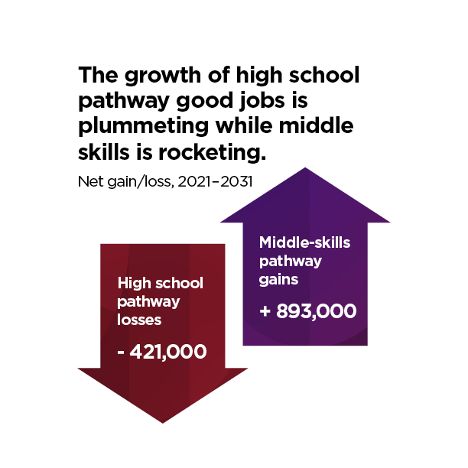
Students relying on high school credentials alone will be increasingly out of luck, whereas students (or employees) who combine high school credentials with the right workforce and skills development will be ideally suited for good jobs and related career tracks.
Unlocking an Enormous Opportunity for Institutions
Although the Georgetown report provides compelling evidence for upskilling learners, expanded workforce and skills development offer a huge upside for institutions. With one program, colleges and universities can reach beyond traditional enrollees to include the following:
- Nontraditional students
- The 43 million “some college, no credentials” learners under age 65 in the United StatesFootnote3
- Employees seeking microcredentials, digital badges, and stackable certifications
- Working professionals seeking new technology or management skills
As students and workers begin to understand where these good jobs are coming from, the demand for upskilling should accelerate. Institutions that master this new career pathways capability early will become category leaders. XR solutions, along with institutional resources and expertise, help deliver the following benefits:
- Work-based learning that’s both relevant and real-world
- Multiple entry and exit points
- Accessible discovery that gives diverse learners a chance to explore career possibilities
- Wraparound services that include skills assessments, counseling, and career placement
Whether enabling students to move into new occupations after high school or helping returning learners improve their credentials, XR-centered learning is an ideal way to reach deeper into the community. It provides all students with added opportunities.
Overcoming Early XR Limitations
XR has been deployed before, but with mixed results. Many institutions are sitting on failed XR pilots that were abandoned for reasons ranging from technical complexity to lack of measurable impact. But three changes make the current moment much different.
1. A Huge and Expanding Content Universe
Early XR efforts, especially in higher education platforms, were only able to take learners as far as the content library allowed. Generative AI and new user-friendly authoring tools have dramatically reduced content costs, increasing the size of the content universe.
2. Hardware That Delivers Better Durability and Manageability
Content wasn’t the only challenge. Many first-generation devices created complexity. IT and instructional teams were busy managing fragility instead of building for learning. Today’s devices have matured into complete solutions, and vendor partners are better equipped to be operational and strategic partners.
3. Greatly Reduced “XR Sickness”
The last big obstacle was motion/XR sickness, which impacted up to one in four learners. Changes and improvements to devices, along with best practices such as shorter sessions, have largely eliminated XR sickness.
The new generation of XR solutions has enabled the current inflection point. It’s now time for institutions and their technology partners to fulfill the original promises of XR for education.
Advancing Interactive Works in Progress
Lenovo collaborates with partners to ensure that higher education solutions are not only technically compatible but also aligned with learning priorities. This helps institutions maximize the value of their technology investments, improve student and faculty experiences, and support mission-critical academic outcomes.
Hands-On, Future-Ready
Immersive career-exploration and learning platforms, such as Transfr, are transforming how students and adult learners prepare for the workforce. Through XR and mobile technologies, Transfr provides over three-hundred training simulations, career assessments, and guided learning experiences that help individuals explore jobs in virtual reality while building real-world skills across high-demand industries.
Higher education institutions and workforce programs are using these approaches to reach adult learners, career changers, and nontraditional students. By integrating personalized training and career matching, institutions are enabling diverse learners to explore career pathways and gain the skills they need for advancement and employment.
Today, students can access more than thirty interactive XR job simulations in fields such as health care, manufacturing, and technology, along with mobile “day-in-the-life” experiences. For educators, these multilingual platforms offer curriculum alignment, grant-ready support, and easy-to-use dashboards—all well suited to higher education and workforce-development needs.
Soft Skills, Strong Impact
Another XR solution provider, VirtualSpeech, helps learners and working adults acquire the essential soft skills needed for career advancement. Combining XR and AI, the platform creates immersive environments for practicing public speaking, interviews, presentations, networking, and real-world workplace interactions that include negotiation and conflict resolution.
This focus on human engagement makes it ideal for workforce and career development. Students get real-time feedback on speech and body language, AI-powered interview coaching, and industry-specific scenarios, all with higher education-ready features such as accessibility and performance tracking.
In What Other Ways Is Technology Helping?
Although much attention is given to how technology impacts instruction specifically, here are a few additional ways these tools can help other specialists work more effectively:
- Automated assessments and recommendations free up counselors so they can provide deeper, more personalized guidance.
- Instructional specialists can scale and iterate with greater confidence.
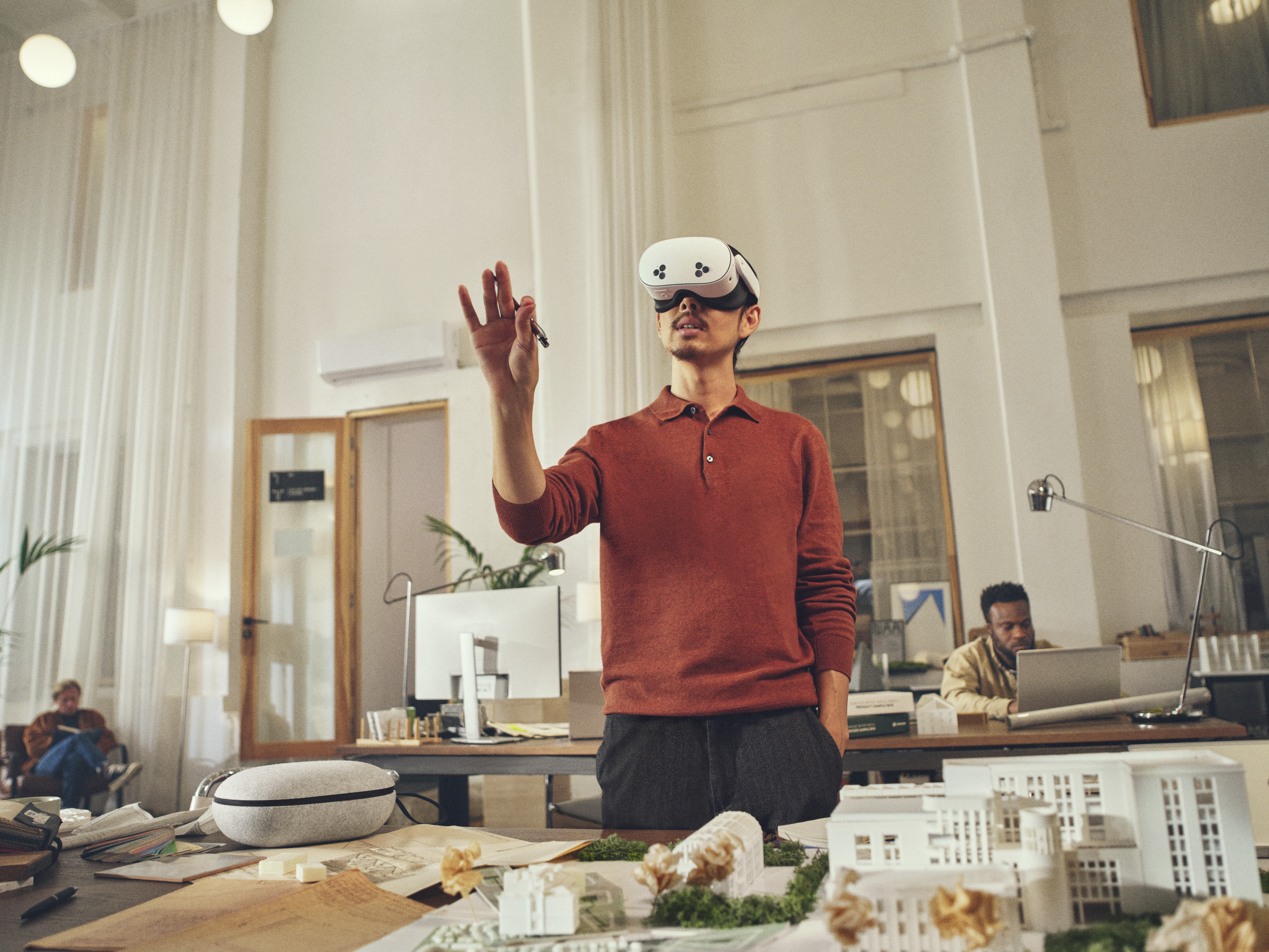
Deploying or Scaling XR
Decision-makers looking to deploy or scale an XR learning program have many variables to manage. Although specific coursework needs and goals shape final decisions, some considerations are universal. Workforce Development in Higher Education.
Technology and Beyond: Foundational Elements
Before designing coursework and deploying devices, institutions need to ensure that the fundamental support layers are in place.
Technical Support
Institutions should ensure that XR equipment is reliable, easy to manage, and supported by robust connectivity wherever it’s deployed.
Staff Support
Educators need hands-on professional development, ongoing training, and expert guidance to meaningfully embed XR into learning.
Funding Support
AI and XR investments can feel risky; supplemental budget support can go a long way toward overcoming objections.
Essential Metrics and Measurements
Whether proving ROI or assessing institutional culture for innovation and adoption, the right metrics are critical to building and sustaining any new initiative, including XR.
Measuring Engagement
Quantifying adoption is possible well before the first learning outcomes are available by tracking student participation rates in XR simulations, time spent in immersive modules, and frequency of career pathway exploration to gauge overall program interest.
Capturing Outcomes
Understanding student outcomes is at the center of everything. Post-training surveys, skills assessments, and progression data enable institutions to analyze gains in confidence, readiness, and employment or advancement rates.
Elevating Success Stories
Assessing value is not always a quantitative exercise. It also includes sharing testimonials and achievements from diverse learners—including adult, ESL, and justice-impacted students—as well as celebrating their before-and-after transformations.
Highlighting Advantages for the Institution
Monitoring retention, equity progress, and partnerships with employers or workforce boards helps to measure the value created for learners and the institution.
Choosing an XR Partner
Even the most sophisticated organizations struggle to implement and scale XR successfully. They need partners that not only have expertise in the technology but also understand the challenges and constraints of implementing complex solutions in busy higher education environments.
The right partner will be willing to jump in and help curb the complexity—from funding to final deployment and content updates. These two qualifications are essential:
- A solid history of partnerships across hardware, software content, and infrastructure. Only a big-picture view can help higher education leaders solve ecosystem-level challenges and enable them to build with validated solutions instead of a patchwork of point solutions.
- The ability to ensure that all the moving pieces stay in motion. When learning platforms go down, learning stops. This is always disruptive, but it is even more so for nontraditional students. Uptime is critical. The future is waiting!
Ready for the Future of Learning? Let’s Build It Together.
Lenovo is a world leader of educational technology for higher education. Our XR partnerships are helping global institutions of all shapes and sizes meet the needs of tomorrow today.
 EDUCAUSE Mission Partners
EDUCAUSE Mission Partners collaborate deeply with EDUCAUSE staff and community members on key areas of higher education and technology to help strengthen collaboration and evolve the higher ed technology market. Learn more about EDUCAUSE Mission Partners, and how they’re partnering with EDUCAUSE to support your evolving technology needs.
Note Workforce Development in Higher Education
- The Harris Poll, Employee Engagement and Retention Survey (University of Phoenix, October 2024). Jump back to footnote 1 in the text.
- Jeff Strohl, Artem Gulish, and Catherine Morris, The Future of Good Jobs: Projections through 2031 (Georgetown University Center on Education and the Workforce, 2024). Jump back to footnote 2 in the text.
- Jeremy Cohen et al., Some College, No Credential: A 2025 Snapshot for the Nation and the States (National Student Clearinghouse Research Center, June 2025). Jump back to footnote 3 in the text.
Workforce Development in Higher Education
https://www.techedmagazine.com/category/news-by-industry/