
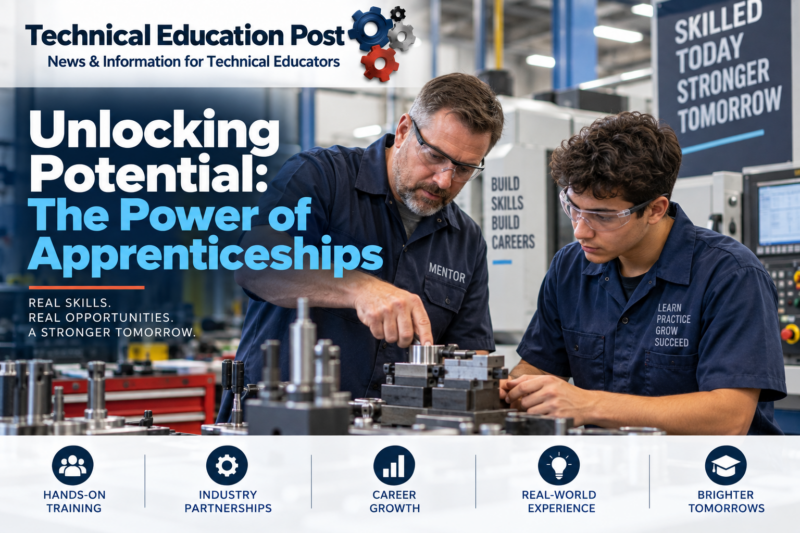
The Enduring Value of Apprenticeships in Modern Manufacturing
The landscape of American manufacturing is in constant evolution, driven by technological advancements, shifting market demands, and an ever-present need for a skilled workforce. Amidst this dynamic environment, a time-tested model of workforce development is experiencing a powerful resurgence: the apprenticeship. Far from being a relic of the past, apprenticeships are proving to be a potent engine for unlocking individual potential, building robust company capabilities, and strengthening the future of the manufacturing sector. This article delves into the multifaceted power of apprenticeships, exploring their mechanics, significance, and the tangible benefits they offer to individuals and businesses alike, from those just starting their careers to seasoned professionals seeking to upskill.
Apprenticeships have become an increasingly popular alternative to traditional college education, offering hands-on experience and practical skills that are highly valued in today’s job market. For those interested in understanding how these programs can enhance educational pathways, a related article titled “Boosting College Enrollment” provides valuable insights into the evolving landscape of higher education and the role of apprenticeships in attracting students. You can read more about it here: Boosting College Enrollment.
What Exactly is an Apprenticeship?

At its core, an apprenticeship is a structured training program that combines on-the-job learning with related classroom instruction. It’s not simply “learning by doing” in a haphazard fashion; rather, it’s a deliberate, guided process designed to equip individuals with the specific skills, knowledge, and experience required for a particular occupation. Apprentices are paid employees, not interns or unpaid trainees, and they earn while they learn, progressing through defined skill levels and receiving regular wage increases as their competencies grow.
The Core Components: Work and Study
The defining characteristic of an apprenticeship is its dual nature. The majority of an apprentice’s time is spent working alongside experienced mentors or journeyworkers on the shop floor, actively participating in real-world tasks and projects. This practical application of skills is invaluable, providing direct exposure to industry standards, problem-solving in authentic contexts, and the nuances of day-to-day operations.
Complementing the on-the-job training (OJT) is a structured component of related technical instruction (RTI). This can take many forms: college courses, community college programs, vocational school classes, or even employer-provided training. RTI covers the theoretical underpinnings of the trade, including mathematics, blueprint reading, safety regulations, material science, and the operation of specialized machinery. The curriculum is typically designed in collaboration with industry experts to ensure its direct relevance to the skills needed in the workplace.
Beyond the Trades: A Modern Approach
While apprenticeships have historically been most prevalent in skilled trades like plumbing, electrical work, and carpentry, their application in manufacturing has expanded significantly. Today, apprenticeships are available in a wide array of advanced manufacturing roles, including:
- Machinists and CNC (Computer Numerical Control) Operators: Operating and programming advanced machining equipment.
- Welders and Fabricators: Specializing in various welding techniques and metal fabrication.
- Mechatronics Technicians: Integrating mechanical, electrical, and computer systems.
- Industrial Maintenance Technicians: Diagnosing, repairing, and maintaining complex manufacturing machinery.
- Quality Assurance Technicians: Ensuring products meet stringent quality standards.
- Production Supervisors and Planners: Gaining leadership and operational management skills.
This diversification reflects the evolving needs of modern manufacturing, which demands not only manual dexterity but also a strong understanding of technology, automation, and data analysis.
How Do Apprenticeships Work? The Mechanics of Skill Development

The success of an apprenticeship hinges on its systematic and progressive nature. The journey from novice to skilled professional is carefully mapped out, ensuring a steady accumulation of expertise and confidence.
Program Structure and Duration
Apprenticeship programs vary in length, typically ranging from one to four years, depending on the complexity of the occupation and the required skill set. Each program has a clearly defined curriculum, outlining the specific skills and knowledge competencies that must be achieved. Apprentices progress through these competencies, often documented in a “competency-based” framework.
Mentorship and Skill Transfer
A cornerstone of any successful apprenticeship is the role of the mentor, or journeyworker. These are experienced professionals who have mastered their craft and are dedicated to guiding the apprentice. Mentors provide hands-on instruction, demonstrate best practices, offer constructive feedback, and foster a supportive learning environment. This one-on-one guidance is crucial for imparting not only technical skills but also the “unwritten rules” of the workplace, problem-solving strategies, and the importance of teamwork and professionalism.
Certification and Advancement
Upon successful completion of an apprenticeship program, apprentices are typically awarded a certificate of completion, often recognized by industry standards and state or federal labor departments. This certification signifies that the individual has met rigorous requirements for skill proficiency and has a proven track record of competence. For many, this marks the transition from apprentice to fully qualified journeyworker, opening doors to higher wages, more challenging roles, and opportunities for further specialization or leadership.
Why Apprenticeships Matter: A Win-Win Proposition
The enduring appeal of apprenticeships lies in the mutual benefits they provide to both the individuals participating and the businesses investing in them. For students and career changers, they offer a clear path to a fulfilling and in-demand career. For established technicians and manufacturing professionals, they represent a pathway for career advancement and skill enhancement.
For Individuals: A Bridge to Opportunity
Apprenticeships offer a compelling alternative to traditional four-year college degrees, particularly for those who thrive in hands-on learning environments or seek to enter skilled professions without accumulating significant student loan debt.
- Earn While You Learn: The ability to earn a living wage from day one is a significant advantage, allowing apprentices to gain financial independence while acquiring valuable skills.
- Reduced Debt: Compared to the substantial costs associated with higher education, apprenticeships offer a debt-free or low-debt route to a well-paying career.
- Job Security and High Demand: Skilled trades and advanced manufacturing roles are consistently in demand. Apprenticeship graduates are highly sought after, leading to strong job security and career stability.
- Clear Career Path: Apprenticeships provide a structured progression, with defined steps for skill development and advancement, offering a clear vision of future career growth.
- Meaningful Work: Apprentices are engaged in tangible, productive work that contributes directly to the success of a company and the creation of essential goods.
For Businesses: Cultivating a Skilled and Loyal Workforce
Companies that invest in apprenticeship programs are strategically building the talent pipeline they need to thrive in a competitive global market.
- Customized Skill Development: Apprenticeship programs can be tailored to a company’s specific needs, ensuring that new hires acquire the exact skills and knowledge required for their operations. This reduces the cost and time associated with retraining existing employees or searching for perfectly qualified external candidates.
- Increased Productivity and Quality: As apprentices gain proficiency, they become valuable contributors to the production process, improving efficiency and the overall quality of goods.
- Reduced Turnover: Apprentices who are invested in by a company are more likely to develop loyalty and remain with the organization long-term, significantly reducing recruitment and training costs associated with high turnover.
- Enhanced Innovation and Problem-Solving: A well-trained workforce, exposed to diverse skill sets and perspectives through apprenticeships, can foster a more innovative and adaptable company culture.
- Stronger Succession Planning: Apprenticeships are an effective way to groom future leaders and skilled specialists, ensuring continuity and institutional knowledge transfer within the organization.
- Positive Company Image: Companies that offer apprenticeships are often viewed as community-minded and committed to workforce development, enhancing their reputation among potential employees and customers.
Apprenticeships play a crucial role in bridging the skills gap in various industries, including aerospace manufacturing. For a deeper understanding of how workforce programs are shaping this sector, you can read about innovative initiatives in a related article that highlights the importance of hands-on training and collaboration between companies and educational institutions. This article can be found here. By investing in apprenticeships, companies not only enhance their workforce but also contribute to the overall growth of the industry.
Common Technologies and Processes in Manufacturing Apprenticeships
Modern manufacturing is a fusion of traditional craftsmanship and cutting-edge technology. Apprenticeship programs reflect this reality, exposing trainees to a wide range of tools, equipment, and methodologies.
Advanced Machining and Automation
- CNC Machining: Apprentices learn