
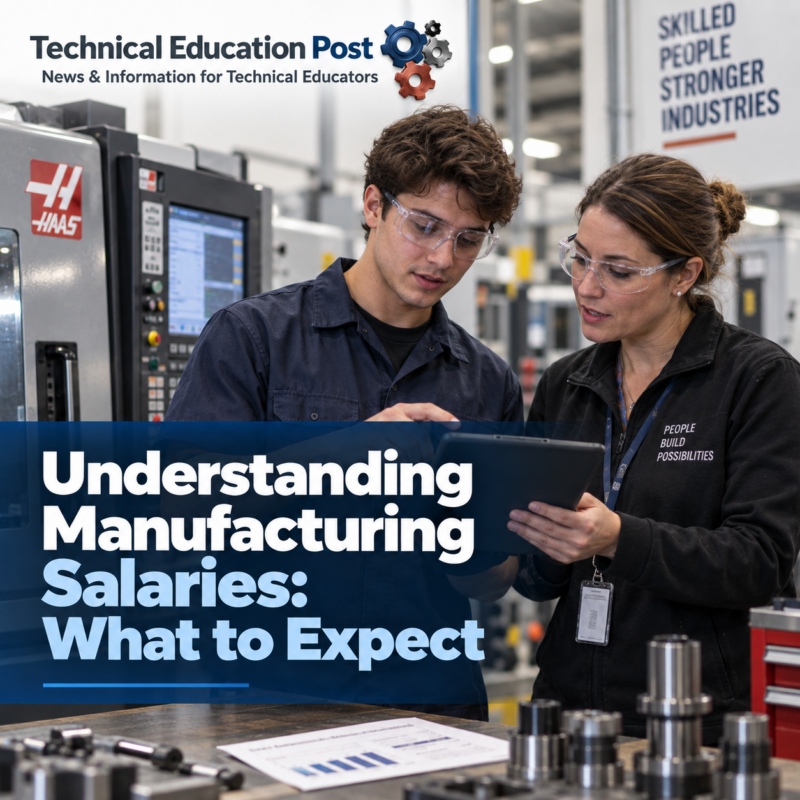
Unpacking Manufacturing Salaries: A Comprehensive Guide for Today’s Workforce
The manufacturing sector, a cornerstone of the U.S. economy, is undergoing a significant transformation. Driven by technological advancements, shifting global dynamics, and a renewed focus on domestic production, the industry offers a diverse range of career paths. For students exploring their futures, educators guiding them, career changers seeking new opportunities, technicians maintaining complex machinery, and seasoned manufacturing professionals, understanding salary expectations is crucial for informed decision-making and career advancement. This guide delves into the intricate world of manufacturing salaries, providing a clear, authoritative overview of what to expect, what influences pay, and how to navigate this dynamic field.
In exploring the landscape of manufacturing salaries, it’s essential to consider the impact of specialized training programs on workforce development. A related article discusses a partnership between CEI and Premier that focuses on a welding program aimed at enhancing skills in the manufacturing sector. This initiative not only addresses the skills gap but also has the potential to influence salary structures within the industry. For more information, you can read the article here: CEI and Premier Team Up on Welding Program.
The Landscape of Manufacturing Compensation

Manufacturing salaries are not a monolithic entity. They are influenced by a complex interplay of factors, from the specific role and its required skills to the geographic location and the size and type of company. Recognizing these variables is the first step in comprehending the earning potential within the sector.
What Drives Manufacturing Wages?
Several key elements contribute to the salary of a manufacturing professional:
- Skill Set and Expertise: Highly specialized skills, whether in advanced automation, precision machining, quality control, or complex programming, command higher salaries. The more in-demand and difficult-to-acquire a skill, the greater its value in the job market. For instance, a CNC machinist with extensive experience in multi-axis programming will likely earn more than an operator focused solely on basic machine operation.
- Experience Level: Entry-level positions naturally offer lower starting salaries compared to mid-career or senior roles. Years of hands-on experience, proven problem-solving abilities, and a track record of success significantly boost earning potential. A production supervisor with five years of experience will generally earn more than someone newly promoted to the role.
- Industry Sub-Sector: Different manufacturing industries have varying compensation structures. For example, the aerospace and defense sector, known for its high-tech components and stringent quality requirements, often offers more competitive salaries than some segments of consumer goods manufacturing. Similarly, industries like pharmaceuticals or specialized electronics manufacturing may pay a premium due to their complexity and regulatory oversight.
- Geographic Location: Cost of living and the concentration of manufacturing facilities play a significant role. Major manufacturing hubs, particularly those in areas with a high demand for skilled labor and a higher cost of living, tend to offer higher salaries. For example, manufacturing jobs in California or the Northeast might offer higher nominal wages than those in the Midwest, though this must be balanced against regional living expenses.
- Company Size and Type: Large, established corporations often have more structured salary bands and may offer more comprehensive benefits packages, including higher base salaries and bonuses. Smaller businesses or startups might offer more flexibility or equity, but their base salaries could be more conservative. Contract manufacturing, specialized component suppliers, and original equipment manufacturers (OEMs) can all have distinct compensation philosophies.
- Education and Certifications: While practical experience is paramount, formal education, vocational training, and industry-recognized certifications can significantly enhance earning potential. Degrees in engineering, supply chain management, or specialized technical fields, along with certifications in areas like Six Sigma, Lean Manufacturing, or specific software platforms, often lead to higher-paying roles.
- Demand and Supply: Like any market, the labor market for manufacturing roles is subject to the principles of supply and demand. When there is a high demand for a particular skill set and a limited supply of qualified workers, salaries tend to rise. Conversely, in areas with an oversupply of certain skills, wages may stagnate or decline.
Defining Salary Components: Base Pay, Benefits, and Beyond
Understanding a manufacturing salary involves looking beyond just the base wage. A comprehensive compensation package often includes several components:
- Base Salary/Hourly Wage: This is the fixed amount of money earned for work performed. For many production roles, this is an hourly wage, while management, engineering, and specialized technical roles often receive a fixed annual salary.
- Overtime Pay: For hourly workers, opportunities for overtime can significantly increase overall earnings, especially in industries with fluctuating production demands. U.S. labor laws mandate premium pay for hours worked beyond a standard 40-hour week.
- Bonuses and Incentives: Performance-based bonuses, profit-sharing plans, and production incentives are common, particularly in roles directly tied to output and efficiency. These can be individual, team, or company-wide.
- Health Insurance: Comprehensive health insurance plans, including medical, dental, and vision coverage, are a standard and highly valued part of most manufacturing compensation packages. The quality and cost-sharing of these plans can vary considerably.
- Retirement Plans: 401(k) plans, often with employer matching contributions, are a critical component for long-term financial security. The generosity of employer matches can be a significant differentiator in total compensation.
- Paid Time Off (PTO): This includes vacation days, sick leave, and holidays, all of which contribute to work-life balance and overall job satisfaction.
- Other Benefits: These can include life insurance, disability insurance, tuition reimbursement for further education, employee assistance programs, and company-provided uniforms or safety equipment.
Navigating Salary Ranges by Role and Experience

The diversity of roles within manufacturing translates into a wide spectrum of salary expectations. From entry-level production line workers to highly skilled engineers and plant managers, each position has its own typical earning potential, which naturally increases with experience.
Entry-Level and Production Roles
These roles form the backbone of many manufacturing operations. They often require a high school diploma or equivalent, with on-the-job training being common.
- Production Worker/Assembly Line Worker: Tasks include assembling components, operating basic machinery, and performing quality checks.
- Salary Expectation: Typically ranges from $30,000 to $45,000 annually, or $15-$22 per hour. This can be higher in areas with a strong manufacturing presence and higher cost of living.
- Machine Operator (Basic): Operating and monitoring standard manufacturing machinery, performing routine maintenance, and adhering to safety protocols.
- Salary Expectation: Generally falls between $35,000 and $50,000 annually, or $17-$25 per hour.
- Material Handler: Moving raw materials, finished goods, and supplies within the facility using forklifts, pallet jacks, or other equipment.
- Salary Expectation: Similar to basic machine operators, often $30,000 to $45,00