
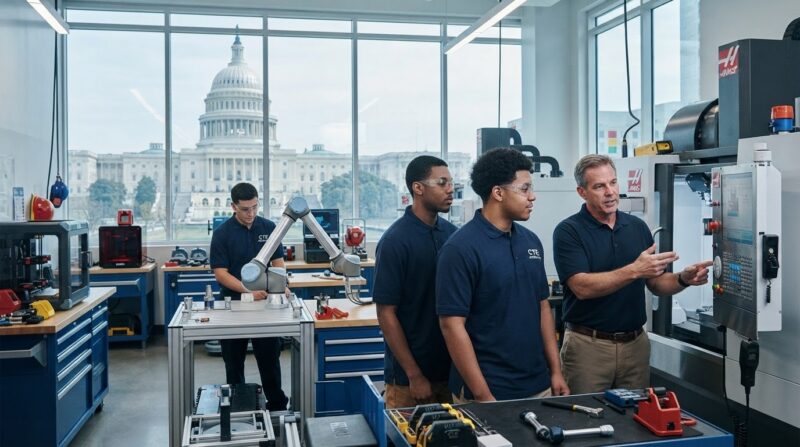
A fiscal year 2027 federal appropriations proposal would increase Perkins V Basic State Grant funding, but differences between House and Senate plans leave the final outcome uncertain.
Federal career and technical education funding is entering an important period of congressional negotiations as lawmakers work toward a December deadline for government funding.
In a November 20, 2026, policy update, Advance CTE highlighted provisions in the Senate’s fiscal year 2027 Labor, Health and Human Services, Education, and Related Agencies appropriations proposal.
The Senate Appropriations Committee released the legislation on November 16 as part of a package of five remaining annual funding bills.
Among the provisions is a proposed $10 million increase for the Carl D. Perkins Career and Technical Education Act Basic State Grant program. The proposal would provide additional support for the federal funding stream that helps states strengthen career and technical education programs.
However, the increase has not yet become law, and final funding levels remain subject to congressional negotiations.
Perkins V Remains Central to Federal CTE Support
The Carl D. Perkins Career and Technical Education Act, commonly called Perkins V, provides federal support for secondary and postsecondary career and technical education.
The Basic State Grant program helps states and eligible institutions improve CTE programs, strengthen career pathways and connect education with workforce requirements.
Depending on applicable requirements and local plans, Perkins-supported activities can include curriculum improvements, professional development, technical equipment and initiatives intended to improve program quality.
The law also emphasizes accountability, student outcomes and coordination among educational institutions and workforce partners.
These provisions make federal appropriations particularly relevant to school districts, technical centers and community colleges planning future programs.
What the Senate Proposal Would Change
According to Advance CTE’s November 20 analysis, the Senate proposal includes a $10 million increase for Perkins V Basic State Grants. Funding for Perkins Title II National Activities would remain level.
The proposal also maintains level funding for the Adult Education and Family Literacy Act.
These distinctions matter because different federal programs support different parts of the education and workforce development system.
Perkins Basic State Grants directly support state-level CTE activities. National Activities funding supports initiatives administered at the federal level. Adult education funding addresses another important part of the workforce pipeline, including opportunities for adults who need foundational education before pursuing additional training.
A proposed increase in one funding category does not automatically translate into equal increases across every education program.
House and Senate Differences Remain Unresolved
The House and Senate have developed different approaches to fiscal year 2027 education appropriations. Those differences must be resolved before final spending legislation can be enacted.
Advance CTE reports that federal government funding is currently scheduled to expire on December 11, 2026.
Congress may need to enact full-year appropriations or approve another continuing resolution to avoid a funding lapse.
A continuing resolution would generally extend funding temporarily under specified conditions rather than resolve every question about annual appropriations.
For CTE administrators, the uncertainty creates challenges when planning initiatives that require long-term staffing, equipment purchases or program expansion.
Why Funding Predictability Matters
Career and technical education programs frequently require significant investments before students enter a classroom or laboratory.
Advanced manufacturing programs may need machine tools, electrical trainers, robotics systems and specialized safety equipment. Healthcare programs may require simulation equipment and clinical training resources.
Automotive and transportation programs need access to vehicles, diagnostic tools and technology appropriate to the occupations students are preparing to enter.
Schools also face ongoing costs associated with instructor qualifications, equipment maintenance and curriculum updates.
When funding levels are uncertain, administrators must balance program ambitions against the risk of committing resources that may not be available. This makes timely federal appropriations decisions important even when proposed funding changes appear relatively modest.
Reporting Changes Also Draw Attention
The November 20 Advance CTE update identifies another federal policy development. Advance CTE and the Association for Career and Technical Education finalized joint comments regarding proposed changes to the Perkins V Consolidated Annual Report guidance.
The organizations support changes intended to streamline reporting and better align data collection with the updated National Career Clusters Framework.
For education administrators, reporting requirements influence how programs document student participation, outcomes and performance. Efforts to modernize reporting may help institutions communicate results more clearly, provided the final requirements remain practical and consistent.
What CTE Administrators Should Watch
Three developments deserve particular attention in the coming weeks. First, institutions should monitor negotiations concerning the proposed Perkins V funding increase. Second, administrators should follow decisions about the December 11 federal funding deadline.
Third, state and local CTE leaders should review proposed reporting changes and consider how future requirements could affect their programs.
The Senate proposal signals continued federal attention to career and technical education, but the final budget remains unresolved.
For school leaders and technical educators, the priority is to distinguish between proposed funding and enacted appropriations while preparing for multiple possible outcomes.
Sources: Advance CTE, November 20, 2026; Senate Appropriations Committee, November 16, 2026.