
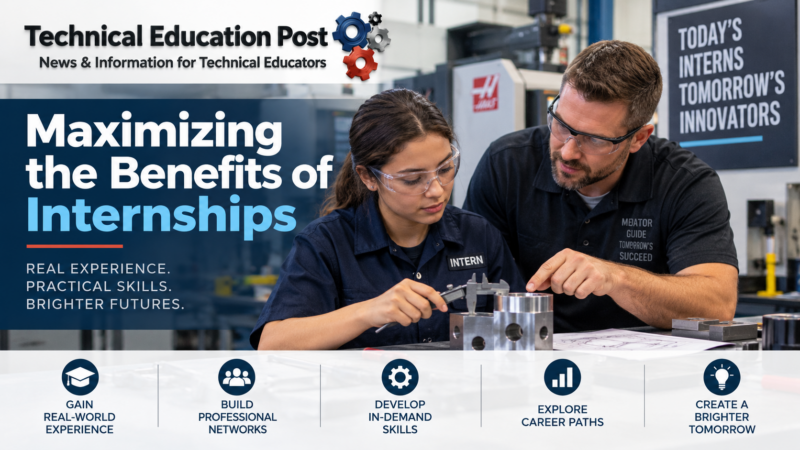
The Strategic Power of Internships: Unlocking Your Potential in Technology and Manufacturing
The landscape of technology and manufacturing is in constant flux, demanding a workforce that is not only knowledgeable but also adaptable and experienced. For students, educators, career changers, technicians, and seasoned manufacturing professionals alike, understanding and strategically leveraging internships is no longer an optional extra, but a critical component of professional development and career advancement. Internships offer a unique bridge between theoretical knowledge and practical application, providing invaluable insights, skill development, and networking opportunities that can shape a successful career trajectory. This article will delve into the multifaceted benefits of internships, offering actionable advice for maximizing their impact across various stages of professional life.
Internships are a crucial stepping stone for students looking to gain practical experience in their chosen fields. For those interested in the intersection of technology and sustainability, exploring opportunities in renewable energy can be particularly beneficial. A related article that delves into the educational aspects of this field is available at Renewable Energy Education Curriculum, which discusses how educational programs are evolving to meet the demands of the renewable energy sector.
Understanding the Internship Ecosystem

At its core, an internship is a structured program designed to provide practical, on-the-job training and experience in a specific field or industry. While often associated with university students seeking credit or pre-graduation experience, internships are increasingly becoming a vital tool for a broader audience.
Defining Internships in Today’s Context
Beyond the traditional student model, internships now encompass a spectrum of opportunities. For career changers, they represent a chance to pivot into a new industry, gaining foundational experience without the immediate pressure of full-time commitment. For technicians and existing manufacturing professionals, internships can offer exposure to cutting-edge technologies, specialized processes, or management roles, fostering upskilling and career mobility. These programs can vary in duration, from a few weeks to a full year, and may be paid or unpaid, though paid internships are increasingly the norm, reflecting the value placed on intern contributions.
The Differentiated Value Proposition for Various Audiences
For Students: Internships are foundational. They provide the first tangible exposure to a professional environment, allowing students to test career hypotheses, apply classroom learning, and build a resume beyond academic achievements. They are a crucial step in discerning a desired career path within the vast fields of technology and manufacturing.
For Educators: Understanding internship trends and opportunities allows educators to better tailor curricula and advise students on relevant experiences. It highlights the skills and knowledge gaps that industry currently faces, informing pedagogical approaches.
For Career Changers: Internships offer a low-risk, high-reward entry point into a new sector. They allow individuals to demonstrate transferable skills, build a new professional network, and prove their commitment and aptitude to potential employers in a new domain.
For Technicians and Manufacturing Professionals: Internships can be a pathway to specialization, leadership, or diversification. They can expose individuals to new software, automation technologies, quality control methodologies, or project management techniques, enhancing their marketability and long-term career prospects.
How Internships Cultivate Essential Skills and Knowledge

The true power of an internship lies in its ability to cultivate a diverse range of skills that are highly sought after by employers in technology and manufacturing. These skills go beyond mere technical proficiency.
Bridging the Gap Between Theory and Practice
University coursework often provides a strong theoretical foundation. However, the real-world application of these theories can be complex and nuanced. Internships provide the crucial bridge, allowing individuals to see how abstract concepts manifest in tangible projects and daily operations. For example, a student learning about Lean Manufacturing principles in a classroom can directly observe and participate in Kaizen events or value stream mapping exercises on a factory floor, understanding the practical challenges and rewards. Similarly, a computer science student can move from coding algorithms to debugging complex software systems in a real product development cycle.
Developing Technical Acumen and Tool Proficiency
Manufacturing and technology are rapidly evolving. Internships offer a direct pathway to gain hands-on experience with the latest machinery, software, and methodologies. This could involve operating advanced CNC machines, programming industrial robots, utilizing sophisticated CAD/CAM software, or working with data analytics platforms for process optimization. For a technician, this hands-on exposure can be transformative, allowing them to acquire proficiency in tools and technologies that might not be accessible in their current roles or through conventional training.
Cultivating Soft Skills: The Unsung Heroes of Career Success
While technical skills are essential, soft skills often determine long-term career progression. Internships are fertile ground for developing these crucial attributes:
- Communication: Interns learn to communicate effectively with colleagues, supervisors, and potentially clients, whether through written reports, presentations, or direct conversations. This includes active listening and the ability to articulate complex ideas clearly.
- Teamwork and Collaboration: Most projects in technology and manufacturing are collaborative. Interns learn to work effectively within teams, understanding different roles, contributing to shared goals, and navigating team dynamics.
- Problem-Solving and Critical Thinking: Interns are often tasked with real problems, requiring them to analyze situations, identify root causes, and propose solutions. This develops their ability to think critically and approach challenges systematically.
- Adaptability and Resilience: The fast-paced nature of many tech and manufacturing environments demands flexibility. Interns learn to adapt to changing priorities, unexpected challenges, and new information, developing resilience in the face of setbacks.
- Professionalism and Work Ethic: Internships instill a sense of responsibility, punctuality, and commitment to quality, crucial for building a reputation as a reliable and dedicated employee.
Maximizing the Internship Experience: A Strategic Approach
Simply securing an internship is only the first step. To truly maximize its benefits, a proactive and strategic approach is essential. This involves setting clear goals, actively engaging, and reflecting on the experience.
Defining Your Internship Objectives
Before embarking on an internship, it’s crucial to define what you hope to achieve. These objectives should be specific, measurable, achievable, relevant, and time-bound (SMART).
- Skill-Based Objectives: “I want to gain proficiency in using SOLIDWORKS for mechanical design,” or “I aim to understand the implementation of Six Sigma methodologies in a production environment.”
- Industry Exploration Objectives: “I want to determine if a career in industrial automation aligns with my interests,” or “I aim to experience the day-to-day operations of a semiconductor manufacturing facility.”
- Networking Objectives: “I want to connect with at least three engineers in the robotics division,” or “I aim to build relationships with individuals in project management roles.”
- Project-Based Objectives: “I want to contribute to the successful completion of a specific product development phase,” or “I aim to assist in optimizing a particular production line bottleneck.”
Proactive Engagement and Learning
Once the internship begins, active participation is key. Don’t wait for tasks to be assigned; seek them out.
- Ask Questions: Curiosity is a powerful learning tool. Ask questions about processes, technologies, and business decisions. This demonstrates engagement and a desire to understand. Frame questions thoughtfully, showing you’ve done some prior thinking.
- Seek Feedback: Regularly ask your supervisor and colleagues for feedback on your performance. This allows you to identify areas for improvement and demonstrate your commitment to growth.
- Volunteer for Projects: Offer to assist with tasks or projects that go beyond your assigned duties. This shows initiative and broadens your exposure.
- Observe and Document: Pay close attention to how things are done, the challenges faced, and the solutions implemented. Keep a journal or log of your observations and learnings.
- Network Intentionally: Don’t just exchange business cards. Engage in meaningful conversations, ask about their career paths, and learn about their roles. Attend company events and social gatherings.
Reflecting on and Documenting Your Growth
The learning process doesn’t end when the workday is over. Regular reflection is crucial for consolidating knowledge and identifying key takeaways.
- Regular Journaling: At the end of each day or week, jot down what you learned, challenges you encountered, and successes you achieved. Note any new technical terms or concepts you encountered and research them.
- Portfolio Development: Collect examples of your work, whether it’s design documents, code snippets, reports, or presentations. This will be invaluable when applying for future roles.
- Skills Assessment: Periodically assess your progress against your initial SMART objectives. Are you on track? What adjustments do you need to make?
- Post-Internship Review: After the internship concludes, conduct a thorough review. What were the most significant learnings? What skills did you develop? What did you enjoy most and least? How has this experience shaped your career aspirations?
Internships play a crucial role in bridging the gap between academic knowledge and real-world experience, providing students with valuable skills and networking opportunities. For those interested in exploring innovative projects, a related article discusses an engaging global warming kit that can enhance educational experiences. You can read more about it in the article found here. This resource not only highlights the importance of hands-on learning but also emphasizes the significance of internships in fostering a deeper understanding of critical global issues.
Real-World Applications and Career Implications
Internships in technology and manufacturing provide a direct pipeline to understanding and contributing to the industries that are shaping our future.
Technology Sector Applications
In the technology sector, internships can span a wide range of disciplines:
- Software Development: Interns might contribute to coding, testing, debugging, or even designing user interfaces for new applications, operating systems, or cloud services. They gain experience with various programming languages (Python, Java, C++), development frameworks, and version control systems like Git.
- Data Science and Analytics: Interns can work on data cleaning, statistical analysis, building predictive models, or visualizing data to derive insights for businesses. This involves using tools like SQL, R, Python libraries (Pandas, NumPy, Scikit-learn), and visualization tools like Tableau or Power BI.
- Cybersecurity: Internships in this field might involve penetration testing, vulnerability assessment, security monitoring, or developing security protocols. Experience with network security tools and an understanding of threat landscapes are crucial.
- Artificial Intelligence and Machine Learning: Interns could contribute to training machine learning models, developing AI algorithms, or implementing AI solutions for specific business problems, working with frameworks like TensorFlow or PyTorch.
- Hardware Engineering: Interns might assist in designing, testing, or prototyping electronic components, printed circuit boards (PCBs), or integrated circuits, gaining experience with EDA tools and testing equipment.
Manufacturing Sector Applications
The manufacturing sector offers equally diverse and impactful internship opportunities:
- Advanced Manufacturing and Automation: Interns can work with industrial robots (e.g., FANUC, KUKA), programmable logic controllers (PLCs) for process control, and automated assembly lines. They might be involved in programming, troubleshooting, or optimizing automated systems.
- Additive Manufacturing (3D Printing): Interns can gain hands-on experience with various 3D printing technologies (FDM, SLA, SLS), material science, design for additive manufacturing, and post-processing techniques.
- Quality Control and Assurance: Interns can learn to use metrology tools, implement statistical process control (SPC), conduct root cause analysis for defects, and contribute to quality management systems like ISO 9001.
- Supply Chain and Logistics: Internships can involve optimizing inventory management, improving logistics efficiency, analyzing