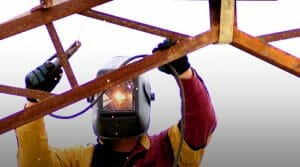

When students first enter a welding lab, a machining shop, or a robotics classroom, many of the most important concepts cannot be easily seen. Heat distribution, arc behavior, material distortion, electrical flow, internal defects, and process timing all happen in ways that can be difficult for beginners to interpret. Good instructors spend a great deal of time finding ways to make those hidden concepts and processes clearer to grasp comprehensively. Hidden Skilled-Trades Education.
Over time, I began to notice how many of the tools instructors naturally use to support learning are forms of technology that help students access information in different ways. Captioned videos allow students to review demonstrations at their own pace. Recorded demonstrations make it possible to revisit complex procedures. Simulations allow learners to explore processes before stepping into the lab. Tactile models or 3-D printed parts can help students physically understand concepts that would otherwise remain abstract.
In many cases, instructors do not think of these tools as “assistive technologies.” They are simply practical ways to help students learn difficult material. But when you step back and look at them more closely, they are doing something important: they expand how students can engage with technical knowledge.
That realization is what led me to pursue my doctoral research in Instructional Technology.
My current study explores how assistive and instructional technologies influence teaching and learning experiences in hands-on technical programs. Skilled trades education is often discussed as purely physical or procedural, yet there is a significant cognitive layer involved in learning these skills. The tools we use to present information whether visual, tactile, digital, or recorded, can shape how students understand and retain what they are learning.
As a Deaf educator working in skilled-trades education, accessibility has always been part of how I think about teaching. My goal with this research is not to study technology itself, but to better understand how intentional the use of technology can strengthen engagement and learning for a wide range of students in technical programs.
Skilled trades education is evolving quickly as automation, digital systems, and global collaboration reshape modern manufacturing. At the same time, the core challenge remains the same: helping students see and understand complex processes so they can develop real skill and confidence in their craft.
If you teach in a skilled trades or technical program and use tools such as recorded demonstrations, captioned videos, simulation software, tactile models, or other technology to support student learning, I would enjoy connecting and hearing about your experiences. Conversations with instructors across the field continue to shape how I think about this work.
Source: Hidden Skilled-Trades Education