
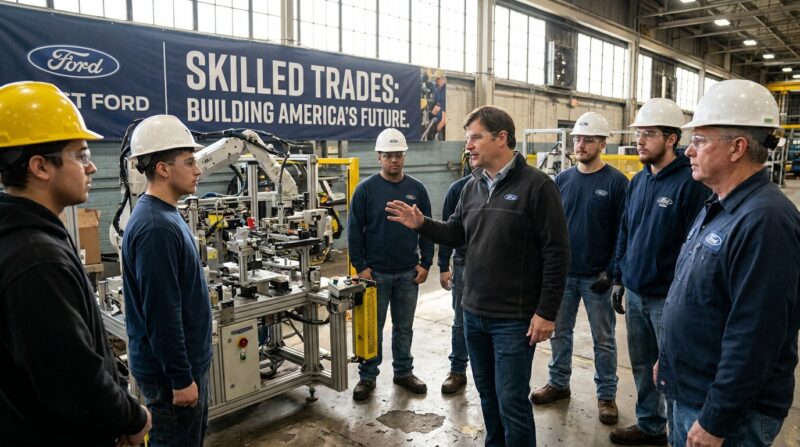
The automotive industry, a cornerstone of the American economy, is facing a critical juncture. As the world accelerates towards electrification and advanced manufacturing, the demand for skilled trades professionals—from electricians and welders to mechanics and advanced manufacturing technicians—is soaring. However, a significant skills gap threatens to undermine this transition, prompting urgent calls for action from industry leaders. In a recent and widely reported statement, Ford Motor Company CEO Jim Farley issued a powerful plea for a cohesive national strategy to revitalize and expand the skilled trades workforce, emphasizing its indispensable role in securing America’s industrial future.
The urgency of Farley’s message stems from a palpable reality: a dwindling pipeline of qualified workers poised to meet the burgeoning needs of modern manufacturing, particularly in the burgeoning electric vehicle (EV) sector and the sophisticated technologies underpinning it. This isn’t just a concern for Ford; it’s a challenge reverberating across numerous sectors that rely on hands-on expertise and specialized technical knowledge. The implications for economic competitiveness, national security, and individual career pathways are profound, underscoring the necessity for a coordinated and robust response.
The call from a CEO of an iconic American company like Ford carries significant weight. It signals a recognition at the highest levels that addressing the skilled trades deficit is not merely a corporate responsibility but a national imperative. Farley’s advocacy highlights the need for a multi-faceted approach, involving collaboration between government, education institutions, industry, and labor organizations. The goal is clear: to ensure a steady stream of skilled workers capable of building, maintaining, and innovating the next generation of American industries. This article will delve into the specifics of Farley’s call, explore the root causes of the skills gap, examine potential solutions, and offer practical takeaways for CTE educators, administrators, workforce development professionals, industry leaders, and policymakers.
The Urgent Need for a National Skilled Trades Strategy
Ford CEO Jim Farley’s pronouncements serve as a critical inflection point in the national conversation around workforce development. His emphasis on a “national strategy” underscores the belief that piecemeal efforts are insufficient to address the scale and complexity of the current skills deficit. This isn’t a problem that can be solved by individual companies or isolated training programs; it requires a coordinated, long-term vision that aligns educational pathways with industry demands.
The EV Revolution and the Growing Demand for Specialized Skills
The automotive industry’s transition to electric vehicles is perhaps the most immediate and visible driver of this heightened demand. Building and servicing EVs requires a different skillset than traditional internal combustion engine vehicles. This includes expertise in battery technology, high-voltage electrical systems, advanced software integration, and specialized diagnostic tools. The manufacturing processes themselves are also evolving, incorporating more robotics, automation, and digital technologies.
According to the U.S. Bureau of Labor Statistics (BLS), employment in manufacturing is projected to grow, and within that, the demand for technicians specializing in areas like renewable energy, electrical equipment manufacturing, and automotive repair for advanced vehicles is expected to rise significantly. For instance, the BLS projects a 6% growth in automotive technician jobs from 2022 to 2032, which is about average for all occupations. However, this doesn’t fully capture the specialized skills needed for EVs, where the complexity and novelty of the technology create a more acute need for trained individuals.
Furthermore, the infrastructure required to support EVs—charging stations, grid modernization, and battery recycling facilities—will also necessitate a robust workforce of electricians, technicians, and engineers. Farley’s vision implicitly acknowledges that the future of American manufacturing hinges on its ability to lead in these emerging technologies, and that leadership is impossible without the skilled people to execute it.
The Decline of Traditional Pathways and the Perception Challenge
A significant factor contributing to the skilled trades deficit is the societal shift away from vocational education over the past few decades. The emphasis in many educational systems has leaned heavily towards four-year university degrees, often portraying skilled trades as a less desirable or lower-status career path. This perception has, unfortunately, led to a decline in the number of young people entering apprenticeships and trade schools, while an aging workforce in many skilled trades is nearing retirement.
Data from organizations like the National Skills Coalition highlight this trend. Their research consistently points to a substantial portion of unfilled jobs in skilled trades, often due to a lack of qualified applicants. This disconnect between job openings and available talent is a direct consequence of decades of underinvestment in and de-emphasis of career and technical education (CTE).
Farley’s call is, in part, a powerful counter-narrative, aiming to reframe the skilled trades as essential, well-compensated, and intellectually stimulating career options that are vital to national prosperity and security. It’s a recognition that a healthy economy requires a diverse talent pool, with respected and valued pathways for individuals who excel in hands-on, technical fields.
In light of Ford CEO’s recent call for a national strategy to rebuild the skilled trades workforce, it is essential to explore initiatives that support this goal. One such initiative is highlighted in a related article discussing the Code313 non-profit, which has announced two summer camps aimed at engaging students in technology and skilled trades. These camps are designed to inspire the next generation of skilled workers and address the growing skills gap in the industry. For more information, you can read the full article here: Code313 Non-Profit Announces Two Summer Camps for Students.
Pillars of a Proposed National Strategy
Jim Farley’s call for a national strategy implies a need for a coordinated effort across several key areas. While the specifics of such a strategy would be multifaceted, several core pillars emerge from industry discussions and policy recommendations. These pillars aim to bridge the skills gap by enhancing education, fostering industry partnerships, and incentivizing career pathways.
Revitalizing and Expanding Career and Technical Education (CTE) Programs
A cornerstone of any national strategy must be the revitalization and expansion of high-quality Career and Technical Education (CTE) programs in high schools, community colleges, and technical institutes. This means ensuring that CTE curricula are up-to-date, aligned with current industry needs, and equipped with modern tools and technologies.
This includes:
- Curriculum Modernization: Aligning CTE programs with the evolving demands of industries like advanced manufacturing, automotive technology (especially EVs), renewable energy, and construction. This involves incorporating digital literacy, robotics, automation, and data analysis skills.
- Teacher Training and Recruitment: Investing in professional development for CTE instructors to ensure they possess the latest technical skills and pedagogical approaches. Attracting and retaining skilled professionals from industry to teach in CTE programs is also crucial.
- Investment in Facilities and Equipment: Providing CTE programs with state-of-the-art equipment and technology that mirrors what students will encounter in the workplace. This might include advanced welding machines, CNC machines, 3D printers, diagnostic tools for EVs, and virtual reality training simulators.
- Increased Access and Funding: Making CTE more accessible to a broader range of students and ensuring adequate funding for these programs, which can often have higher equipment and material costs than traditional academic subjects.
The National Association of Career and Technical Education (ACTE) is a leading advocate for these initiatives, working to ensure that CTE is recognized as a vital component of post-secondary preparation and workforce readiness.
Strengthening Industry-Education Partnerships
Farley’s emphasis on a “national strategy” inherently points to the necessity of robust collaboration between industry and educational institutions. These partnerships are critical for ensuring that training programs are relevant, that students gain real-world experience, and that employers have access to a pipeline of qualified talent.
Key elements of these partnerships include:
- Apprenticeship Programs: Expanding and promoting registered apprenticeship programs, which combine on-the-job training with related technical instruction. These programs have a proven track record of producing highly skilled workers and are a critical component of building the skilled trades workforce. Ford itself has significant apprenticeship initiatives.
- Work-Based Learning Opportunities: Creating more opportunities for internships, co-op programs, and job shadowing that allow students to gain practical experience while still in school. This helps students make informed career decisions and provides employers with early access to potential hires.
- Industry Advisory Boards: Establishing active industry advisory boards for CTE programs to provide input on curriculum development, equipment selection, and emerging skill needs.
- Credentialing and Certification Alignment: Working with industry to ensure that CTE program completers earn credentials and certifications that are recognized and valued by employers.
Organizations like the U.S. Chamber of Commerce have been instrumental in promoting these partnerships, advocating for policies that support business engagement in workforce development.
Incentivizing Skilled Trades Careers
Beyond education and partnerships, a national strategy must also address the perceived value and economic attractiveness of skilled trades careers. This involves both financial incentives and efforts to elevate the public perception of these professions.
This could include:
- Financial Aid and Scholarships: Expanding access to financial aid, scholarships, and grants specifically for students pursuing skilled trades education and apprenticeships. This can help reduce the financial barrier to entry.
- Student Loan Forgiveness Programs: Exploring the possibility of student loan forgiveness or repayment programs for individuals who commit to working in high-demand skilled trades for a specified period.
- Marketing and Awareness Campaigns: Launching national and regional marketing campaigns to highlight the diverse career opportunities, earning potential, and societal importance of skilled trades. These campaigns should target students, parents, and educators.
- Promoting Lifelong Learning and Upskilling: Encouraging and supporting opportunities for existing skilled trades professionals to engage in lifelong learning and upskilling to adapt to new technologies and industry demands.
The Department of Labor’s Office of Apprenticeship plays a crucial role in promoting registered apprenticeships and providing resources for both employers and individuals interested in skilled trades careers.
The Role of Government and Policy
A national strategy, by definition, requires significant government involvement. Policymakers at the federal, state, and local levels have a critical role to play in facilitating, funding, and incentivizing the necessary changes in education and workforce development.
Federal Funding and Legislative Support
Federal funding plays a vital role in supporting CTE programs, apprenticeships, and workforce development initiatives. This includes grants to states and educational institutions, as well as funding for research and program development. Legislative action can also create frameworks and incentives for states and industries to prioritize skilled trades.
For example, the Carl D. Perkins Career and Technical Education Act provides federal funding to states to improve CTE programs. Reauthorizations and expansions of such legislation, with a specific focus on emerging technologies and skilled trades needs, would be a significant step. Furthermore, legislation that streamlines the approval and expansion of registered apprenticeship programs can accelerate their growth.
The U.S. Department of Education and the U.S. Department of Labor are key federal agencies involved in these efforts, working to align educational systems with workforce needs.
State and Local Initiatives
While federal policy sets a broad framework, state and local governments are often on the front lines of implementing workforce development strategies. They have the flexibility to tailor programs to regional economic needs and to foster partnerships within their own communities.
Examples of effective state and local initiatives include:
- State-level CTE funding formulas: Ensuring that CTE programs receive equitable funding compared to other educational pathways.
- Regional workforce development boards: These boards bring together employers, educators, and community leaders to identify local skill needs and coordinate training efforts.
- Industry-specific training grants: Providing grants to businesses to develop or expand training programs for their employees, particularly in high-demand skilled trades.
Many states have established dedicated workforce development agencies or departments that are central to these efforts.
Public-Private Partnerships: A Synergistic Approach
The success of any national strategy hinges on the strength and synergy of public-private partnerships. Government can provide the policy framework, funding, and regulatory support, while private industry brings the on-the-ground expertise, demand signals, and on-the-job training capacity.
This collaborative approach ensures that:
- Training is relevant and responsive: Industry partners ensure that training programs are teaching the skills that are actually needed in the modern workplace.
- Investment is targeted: Public funds can be leveraged by private investment, amplifying the impact of resources.
- Pathways are clear: Partnerships create clearer pathways from education to employment, benefiting both students and employers.
Jim Farley’s call is a strong endorsement of this synergistic approach, recognizing that the scale of the challenge requires all stakeholders to work together. Ford’s own significant investments in training and its engagement with educational institutions exemplify this commitment.
Industry Implications and Economic Impact
The implications of a thriving skilled trades workforce extend far beyond individual companies; they are fundamental to America’s broader economic health and global competitiveness. A robust pipeline of skilled workers is essential for innovation, productivity, and the successful transition to a 21st-century economy.
Maintaining Global Competitiveness
As nations worldwide invest heavily in advanced manufacturing and emerging technologies, the United States cannot afford to fall behind due to a lack of skilled labor. Countries with strong vocational training systems and a deep pool of skilled trades professionals are better positioned to attract investment, drive innovation, and produce high-value goods and services.
The ability to design, build, and maintain advanced infrastructure, from renewable energy grids to sophisticated manufacturing facilities, directly impacts a nation’s ability to compete on the global stage. A skilled trades deficit can lead to production delays, increased costs, and a reliance on foreign expertise, all of which undermine economic sovereignty and competitiveness.
Driving Innovation and Technological Advancement
Skilled trades professionals are not just doers; they are often innovators. The technicians who can operate and maintain complex machinery, the electricians who design and implement intricate electrical systems, and the mechanics who diagnose and repair cutting-edge technology are all crucial to the adoption and advancement of new innovations.
For instance, the rapid development and deployment of electric vehicles would be severely hampered without a workforce capable of manufacturing, servicing, and upgrading them. Similarly, the expansion of renewable energy sources depends on skilled installers, maintenance technicians, and grid engineers. The skills gap directly impedes the pace at which the nation can adopt and leverage technological progress.
Economic Growth and Job Creation
A strong skilled trades sector is a significant engine for economic growth. It creates well-paying jobs that often do not require a four-year college degree, offering alternative and rewarding career paths. Furthermore, the demand for skilled trades fuels growth in supporting industries, such as tool and equipment manufacturers, training providers, and related service sectors.
According to the National Skills Coalition, skilled trades occupations are projected to grow significantly in the coming years, and many offer wages well above the national average. Investing in skilled trades development is, therefore, a direct investment in job creation and economic prosperity for a broad segment of the population.
In light of the recent call by Ford’s CEO for a national strategy to rebuild the skilled trades workforce, it is essential to explore innovative educational initiatives that can support this goal. One such initiative is a STEM pilot program that empowers students to teach their peers, fostering both leadership and technical skills. This approach not only enhances learning but also cultivates a new generation of skilled workers ready to meet industry demands. For more insights on this initiative, you can read about it in the article on the importance of peer-led education in STEM fields here.
Practical Takeaways for Stakeholders
Jim Farley’s call for a national strategy provides a clear call to action for various groups. Each stakeholder has a unique role to play in building a robust skilled trades workforce for the future.
For CTE Educators and Administrators
- Stay Current: Continuously update curricula and professional development to reflect the latest industry trends and technologies, especially in areas like electrification and automation.
- Forge Partnerships: Actively seek out and strengthen relationships with local industries to understand their specific needs and secure work-based learning opportunities for students.
- Promote CTE: Advocate for the value of CTE programs within your institutions and communities, highlighting the rewarding career paths available.
- Invest in Equipment: Prioritize investment in modern tools and technologies that mirror industry standards to ensure students are job-ready.
For Workforce Development Professionals
- Align Programs: Ensure that training programs directly address the identified skill gaps and are aligned with employer needs and industry-recognized credentials.
- Promote Apprenticeships: Actively recruit both employers and potential apprentices for registered apprenticeship programs, providing guidance and support throughout the process.
- Connect Education and Employment: Facilitate strong connections between educational institutions, training providers, and employers to create clear pathways to employment.
- Data-Driven Strategy: Utilize labor market data to identify emerging needs and tailor workforce development initiatives accordingly.
For Industry Leaders
- Invest in Training: Commit to investing in robust in-house training programs and apprenticeships.
- Collaborate with Educators: Actively participate in curriculum development, provide guest lectures, offer internships, and serve on advisory boards for local CTE programs.
- Elevate the Trades: Promote skilled trades careers within your companies and the broader community, highlighting the value and opportunities they offer.
- Advocate for Policy: Support policies that strengthen CTE, expand apprenticeships, and incentivize skilled trades development.
For Policymakers
- Increase Funding: Prioritize and increase funding for CTE programs, apprenticeships, and workforce development initiatives at all levels of government.
- Streamline Regulations: Reduce barriers to establishing and expanding apprenticeship programs and other workforce training initiatives.
- Incentivize Partnerships: Create policies that encourage and reward collaboration between industry and educational institutions.
- Promote Public Awareness: Support national campaigns to elevate the perception and attractiveness of skilled trades careers.
In light of the Ford CEO’s call for a national strategy to rebuild the skilled trades workforce, it is essential to recognize the efforts being made by educational institutions to support this initiative. For instance, Augusta Technical College recently received a significant donation aimed at enhancing its programs and resources for students pursuing careers in the skilled trades. This investment not only underscores the importance of vocational training but also aligns with the broader goal of addressing the skills gap in the workforce. To learn more about this initiative, you can read the full article here: Augusta Technical College’s $1 Million Donations.
Frequently Asked Questions
Q1: What are the main industries affected by the skilled trades shortage?
A1: The skilled trades shortage is impacting a wide array of industries, including automotive (especially with the transition to EVs), advanced manufacturing, construction, energy (including renewable energy), healthcare (technicians), and information technology.
Q2: How does the electrification of vehicles contribute to the skilled trades demand?
A2: The electrification of vehicles requires new skill sets in areas such as high-voltage electrical systems, battery technology, software integration, and specialized diagnostic and repair techniques, creating a demand for trained automotive technicians and electricians.
Q3: What is the role of apprenticeships in addressing the skilled trades gap?
A3: Apprenticeships are crucial as they combine on-the-job training with related technical instruction, providing a direct pathway to acquiring the specialized skills and experience that employers need. They also offer a debt-free educational route for individuals.
Q4: What can individual CTE educators do to prepare students for future skilled trades jobs?
A4: Educators can focus on integrating current industry technologies into their curriculum, fostering strong partnerships with local businesses for internships and job shadowing, and emphasizing problem-solving and critical thinking skills, alongside technical proficiency.
Q5: How can industry leaders effectively contribute to building the skilled trades workforce?
A5: Industry leaders can contribute by investing in their own training programs and apprenticeships, actively participating in curriculum development with educational institutions, offering mentorship and work-based learning opportunities, and advocating for policies that support skilled trades development.
Conclusion: Building a Foundation for Future Prosperity
Jim Farley’s clarion call for a national strategy to rebuild the skilled trades workforce is more than just a statement from a leading industrialist; it’s a crucial recognition of a foundational challenge that underpins America’s economic future. The automotive industry’s rapid evolution, particularly with the surge in electric vehicle production, is a potent symbol of the broader transformation occurring across numerous sectors. This transition is not merely about adopting new technologies; it’s fundamentally about ensuring that a sufficiently skilled and adaptable workforce is in place to drive, maintain, and innovate these advancements.
The historical de-emphasis on vocational education has created a significant skills gap, leaving many industries struggling to find qualified talent. Addressing this requires a comprehensive and coordinated effort—a national strategy—that revitalizes Career and Technical Education, strengthens industry-education partnerships, and actively promotes skilled trades as desirable, well-compensated, and essential career paths.
For CTE educators, administrators, workforce development professionals, industry leaders, and policymakers, this moment presents a clear call to action. By investing in modern curricula, fostering robust apprenticeships, forging strong collaborations, and advocating for supportive policies, we can collectively rebuild a skilled trades foundation that is not only capable of meeting today’s demands but also agile enough to adapt to the technological advancements of tomorrow. The future of American innovation, global competitiveness, and economic prosperity depends on our ability to cultivate and sustain a skilled, dedicated, and highly capable skilled trades workforce.