
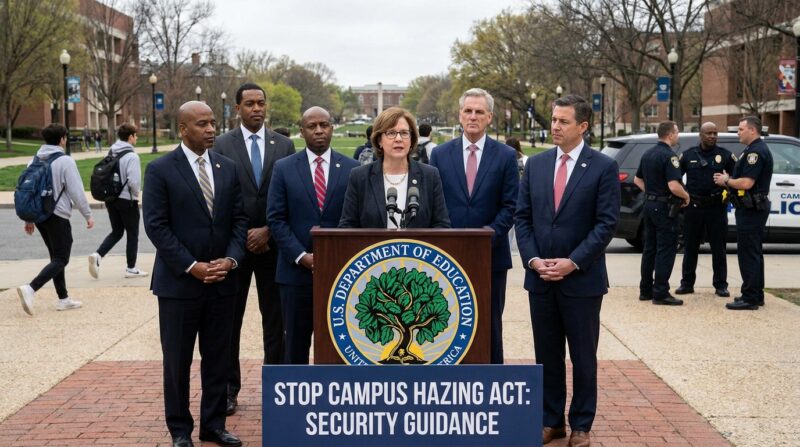
Federal Government Updates Campus Security Guidance Under Stop Campus Hazing Act
The U.S. Department of Education has released updated guidance for institutions of higher education regarding campus safety, specifically addressing hazing prevention and reporting. This initiative, spurred by the implementation of the Stop Campus Hazing Act, aims to bolster protections for students and provide clearer mandates for colleges and universities in fostering secure learning environments. The guidance clarifies existing regulations and introduces new expectations for institutions in their efforts to identify, prevent, and respond to hazing incidents. This development holds significant implications for career and technical education (CTE) programs, particularly those with student organizations, clubs, or that participate in intercollegiate activities.
The Stop Campus Hazing Act, signed into law in December 2021, built upon existing federal requirements for campus safety under the Clery Act. While the Clery Act mandates reporting of certain crimes and outlines campus security policies, the Stop Campus Hazing Act specifically targets hazing as a critical safety concern requiring dedicated attention. The Department of Education’s recent guidance translates the legislative intent of the Act into actionable directives for educational institutions.
For CTE instructors, administrators, and workforce development professionals, understanding these updated federal mandates is crucial. This guidance impacts how student organizations are supervised, how incidents are reported and investigated, and the overall culture of safety within technical colleges and university departments. Ensuring compliance not only mitigates legal risks but also fosters an environment where all students, including those pursuing technical skills, can thrive without fear of harm.
The primary objective of this updated guidance is to ensure that institutions are taking proactive and comprehensive measures to address hazing. This includes developing clear policies, providing adequate training for students and staff, and establishing robust reporting mechanisms. The Department of Education emphasizes a victim-centered approach, ensuring that individuals who report hazing are supported and that investigations are conducted thoroughly and impartially.
This guidance is not merely an administrative update; it represents a renewed federal commitment to student safety and well-being. For the technical education sector, where hands-on learning and collaborative projects are common, understanding and implementing these safety protocols is paramount. It ensures that the focus remains on skill development and career readiness, free from the detrimental effects of hazing.
In light of the recent updates to campus security guidance under the Stop Campus Hazing Act, it is crucial for educational institutions to not only address hazing but also to enhance overall safety measures on campuses. A related article discusses the future of technology in education, particularly how advancements in semiconductors can play a role in improving campus security systems. For more insights on this topic, you can read the article here: Future of Semiconductors in Education.
Enhancing Campus Safety Through Legislative Action and Federal Guidance
The Stop Campus Hazing Act represents a significant federal effort to address the pervasive issue of hazing in higher education. Prior to its enactment, while hazing was prohibited by many institutions, a unified federal directive specifically focused on its prevention and reporting was less defined. The Act seeks to standardize institutional responses and increase accountability.
Origins and Scope of the Stop Campus Hazing Act
The Stop Campus Hazing Act was introduced to address concerns about the adequacy of existing federal regulations in preventing and responding to hazing incidents. It clarifies that hazing is a violation of the Clery Act’s requirements for institutions participating in federal student financial aid programs. This means that institutions must include hazing in their annual security reports and develop comprehensive policies and procedures to prevent and respond to hazing.
The Act mandates that institutions develop and implement policies and procedures to address hazing, conduct an annual review of these policies, and provide educational programming to students and employees. It also requires institutions to report hazing incidents to the Department of Education and to the public through their annual security reports.
Department of Education’s Role in Implementing the Act
Following the passage of the Stop Campus Hazing Act, the Department of Education was tasked with developing and disseminating guidance to assist institutions in complying with its provisions. The recently released guidance document serves as a comprehensive resource, outlining the expectations for institutions regarding hazing prevention, reporting, and response.
This guidance clarifies the definitions of hazing, outlines the elements of a compliant hazing policy, and provides examples of best practices for educational programming and disciplinary procedures. It emphasizes the importance of fostering a campus culture that actively discourages hazing and supports victims.
The Clery Act Connection: A Broader Safety Framework
The Stop Campus Hazing Act is intrinsically linked to the Jeanne Clery Disclosure of Campus Security Policy and Campus Crime Statistics Act (Clery Act). The Clery Act, enacted in 1990, requires all colleges and universities that participate in federal student financial aid programs to disclose information about crime on and around their campuses. This includes reporting statistics for a range of crimes and detailing campus safety policies and procedures.
By explicitly including hazing within the purview of the Clery Act, the Stop Campus Hazing Act elevates its importance as a campus safety issue requiring diligent reporting and proactive prevention strategies. Institutions must now ensure that their Clery Act compliance efforts specifically address hazing, including it in their crime statistics and safety education programs. This integration ensures that hazing is not treated as an isolated incident but as part of the broader campus safety landscape.
Updated Guidance: Key Provisions and Implications for Institutions
The U.S. Department of Education’s updated guidance offers a detailed framework for institutions to comply with the Stop Campus Hazing Act. It moves beyond general mandates to provide specific recommendations and clarifications, ensuring a more robust approach to hazing prevention and response.
Defining Hazing: Clarity and Scope
A crucial aspect of the updated guidance is the emphasis on a clear and comprehensive definition of hazing. The Department reiterates that hazing encompasses any act, whether intentional or unintentional, by one person or a group, that is likely to cause or causes bodily harm, danger, or mental, emotional, or psychological harm to another person, regardless of consent. This definition is broad, covering a wide range of behaviors, from physical abuse and forced consumption of substances to psychological harassment and ridicule.
The guidance stresses that the intent of the perpetrator is not a determining factor in whether an act constitutes hazing. The focus is on the impact of the behavior on the victim. This clarification is vital for CTE institutions to ensure their policies and training cover the full spectrum of hazing behaviors that could occur within student organizations or during experiential learning activities.
Institutional Responsibilities: Policy, Education, and Reporting
The updated guidance outlines several core responsibilities for institutions:
- Policy Development and Review: Institutions are expected to have clear, comprehensive anti-hazing policies that are accessible to all students, faculty, and staff. These policies must define hazing, outline prohibited behaviors, and detail the consequences for violations. The guidance encourages regular review and updates to these policies to reflect current understanding and emerging trends in hazing.
- Educational Programming: A significant component of the guidance is the mandate for ongoing educational programming. Institutions must provide training to students, faculty, and staff on the definition of hazing, the institution’s anti-hazing policy, the risks associated with hazing, and the procedures for reporting incidents. This includes targeted education for student leaders, athletic teams, and other groups where hazing is historically more prevalent.
- Reporting Mechanisms: The guidance emphasizes the need for clear, accessible, and confidential reporting mechanisms. Students and employees must feel safe reporting hazing incidents without fear of retaliation. Institutions are expected to publicize these reporting channels and ensure that all reports are investigated promptly and thoroughly. The guidance also highlights the requirement to report hazing incidents in the institution’s annual security report, in accordance with Clery Act provisions.
- Disciplinary Procedures: Institutions must establish fair and consistent disciplinary procedures for hazing violations. These procedures should outline the investigation process, potential sanctions, and opportunities for appeal. The guidance encourages a tiered approach to sanctions, with consequences escalating based on the severity of the offense and any prior violations.
Reporting and Data Collection: Transparency and Accountability
The Stop Campus Hazing Act, through its integration with the Clery Act, mandates transparency in reporting hazing incidents. Institutions are required to include hazing in their annual campus security reports. This means detailing the number of hazing incidents reported, investigated, and adjudicated, along with the types of disciplinary actions taken.
The updated guidance provides further clarification on what constitutes a reportable hazing incident under the Clery Act. It emphasizes that even incidents that do not result in bodily injury can be considered hazing and must be addressed and reported if they meet the definition. This increased emphasis on reporting aims to create a more accurate picture of hazing prevalence on campuses and to hold institutions accountable for their prevention and response efforts.
The collection of this data is critical for several reasons:
- Informing Prevention Strategies: By tracking the types and frequency of hazing incidents, institutions can better identify patterns and tailor their prevention programs to address specific risks.
- Assessing Program Effectiveness: Data on reported incidents and disciplinary actions can help institutions evaluate the effectiveness of their anti-hazing policies and educational initiatives.
- Promoting Transparency: Publicly available data on hazing incidents fosters transparency and allows prospective students and their families to make informed decisions about their educational choices.
Impact on Technical Education and CTE Programs
The federal government’s updated guidance on campus security, particularly concerning hazing prevention under the Stop Campus Hazing Act, has direct and significant implications for career and technical education (CTE) institutions, including community colleges, technical schools, and university departments offering CTE programs. While often associated with large universities, hazing can occur in any setting where students form groups or participate in organizational activities.
Hazing Risks in CTE Contexts
CTE programs, by their nature, often involve hands-on learning, collaborative projects, and the formation of strong cohort identities. Student clubs, professional organizations, and even informal study groups within CTE programs can become environments where hazing might emerge if not properly monitored and managed.
Examples of potential hazing risks in CTE contexts, though less common than in traditional Greek life settings, could include:
- Student Clubs and Professional Organizations: Many CTE programs have associated student chapters of professional organizations (e.g., SkillsUSA, HOSA-Future Health Professionals, Associated Builders and Contractors student chapters). Initiation rituals or group bonding activities within these clubs could inadvertently cross the line into hazing if not carefully planned and supervised.
- Team-Based Projects and Competitions: The intense collaboration required for projects, competitions (like robotics challenges, welding competitions, or culinary arts cook-offs), or even internships could foster intense group dynamics. In some rare instances, these dynamics could devolve into hazing behaviors as a misguided form of team building or to weed out perceived weaker members.
- Shared Living or Working Environments: For students in residential technical programs or those undertaking extended off-campus internships, shared living spaces or work environments could present opportunities for hazing.
The updated guidance underscores that any group activity, regardless of its association with a specific academic discipline, can be a potential venue for hazing. This means CTE instructors, deans, and administrators must be aware of these risks, even in settings that may not immediately come to mind when thinking about hazing.
Ensuring Student Safety in Hands-On and Collaborative Environments
The core of the updated guidance is proactive prevention and clear response protocols. For CTE programs, this translates into several key considerations:
- Reviewing and Updating Club/Organization Policies: CTE departments that sponsor or advise student clubs or chapters of professional organizations must ensure these groups have robust anti-hazing policies that align with institutional mandates. This includes clear guidelines for any initiation, induction, or team-building activities.
- Educating Faculty and Staff Advisors: Faculty members who serve as advisors to CTE student organizations are critical points of contact. They need to be thoroughly trained on identifying hazing behaviors, understanding reporting obligations, and intervening effectively. The guidance necessitates that these advisors are equipped to recognize subtle signs of hazing that might not be immediately apparent.
- Incorporating Safety Messaging into Curriculum: While not always directly related to the technical skills taught, embedding messages about responsible group behavior, ethical conduct, and the importance of a safe and respectful learning environment can be beneficial. Discussions about teamwork in a professional context can also touch upon healthy group dynamics and the unacceptability of hazing.
- Establishing Accessible Reporting Channels for CTE Students: CTE students must be aware of how to report concerns, especially if they feel uncomfortable discussing them with a faculty member who is also their advisor or instructor for a core course. Ensuring multiple, anonymous reporting options is crucial.
Workforce Readiness and Ethical Conduct
The emphasis on safe and respectful environments extends beyond the classroom to the development of future workforce professionals. Hazing can create a toxic culture that undermines teamwork, erodes trust, and can have long-lasting psychological effects on students. This directly conflicts with the goal of preparing students for professional environments where collaboration, respect, and ethical conduct are paramount.
By adhering to the Stop Campus Hazing Act and the Department of Education’s guidance, CTE institutions are not only ensuring legal compliance but also reinforcing the ethical foundations necessary for successful careers. A student who has experienced or witnessed hazing may carry those negative experiences into their professional life, impacting their ability to work effectively in teams. Conversely, an institution that prioritizes safety and respect demonstrates a commitment to developing well-rounded, ethical professionals.
In light of the recent updates to campus security guidance under the Stop Campus Hazing Act, it is essential for educational institutions to not only address hazing but also to explore innovative solutions for enhancing student safety. A related article discusses the growing demand for robotics jobs, which could play a significant role in developing advanced security systems on campuses. By integrating technology into safety measures, schools can create a more secure environment for students. For more insights on this topic, you can read the article on robotics jobs.
Practical Actions for Educators and Administrators
The updated federal guidance on hazing prevention offers CTE instructors, college leaders, and administrators a clear call to action. Implementing these recommendations requires a proactive, multi-faceted approach to foster a safe and inclusive environment for all students.
Developing and Implementing Robust Anti-Hazing Policies
Institutions must move beyond simply having a policy on paper. The guidance emphasizes making these policies living documents that are actively communicated and enforced.
- Policy Review and Revision: Conduct a thorough review of existing anti-hazing policies. Ensure they align with the broad definition of hazing provided by the Department of Education, covering both intentional and unintentional acts that cause harm. Policies should clearly define prohibited behaviors and outline the consequences for violations.
- Accessibility: Make policies readily accessible to all students, faculty, and staff. This includes publishing them on institutional websites, including them in student handbooks and orientation materials, and prominently displaying them in common areas.
- Clear Statement of Zero Tolerance: Clearly articulate a zero-tolerance stance against hazing in all institutional communications and policies.
Enhancing Educational Programming and Training
Education is a cornerstone of prevention. Training should be comprehensive, ongoing, and tailored to different audiences.
- Student Orientation: Integrate detailed discussions on hazing, institutional policies, and reporting procedures into new student orientation programs, including those for CTE-specific programs.
- Advisor Training: Provide mandatory training for all faculty and staff who advise student organizations, clubs, or lead experiential learning groups. This training should cover identifying hazing behaviors, understanding reporting obligations, and knowing how to intervene appropriately.
- Student Leader Training: Conduct specialized training for student leaders, including those in CTE student organizations. This training should focus on their responsibilities in preventing hazing within their groups and fostering positive group dynamics.
- Regular Reinforcement: Implement ongoing educational campaigns through workshops, presentations, and digital resources to reinforce the message that hazing is unacceptable and to educate students about healthy peer relationships.
Establishing and Promoting Effective Reporting Mechanisms
Students and employees need to feel safe and supported when reporting hazing incidents.
- Multiple Reporting Channels: Establish and clearly communicate multiple avenues for reporting hazing, including anonymous options. This might include a dedicated online portal, a confidential hotline, reporting to specific trusted individuals (e.g., Dean of Students, Title IX Coordinator), or through campus safety departments.
- Confidentiality and Non-Retaliation: Assure reporters of confidentiality to the greatest extent possible and implement strong policies against retaliation for reporting hazing. This assurance is critical to encourage reporting.
- Timely and Thorough Investigations: Ensure that all reports of hazing are investigated promptly, impartially, and thoroughly. This includes interviewing relevant parties, gathering evidence, and documenting the process.
Integrating Hazing Prevention into Broader Campus Safety Initiatives
Hazing prevention should not be a standalone effort but an integrated part of a comprehensive campus safety strategy.
- Clery Act Compliance: Ensure that hazing is consistently and accurately reported in annual campus security reports, in accordance with Clery Act requirements.
- Collaboration: Foster collaboration between student affairs, campus safety, academic departments (including CTE), and student organizations to address hazing comprehensively.
- Culture of Respect: Actively cultivate a campus culture that values respect, inclusivity, and the well-being of all students. This involves leadership messaging and visible commitment from all levels of the institution.
In light of the recent updates to campus security guidance under the Stop Campus Hazing Act, it is essential for educational institutions to stay informed about best practices and innovative solutions for enhancing student safety. A related article discusses how technology is being leveraged in various fields, including education, to create safer environments for students. For more insights on this topic, you can read about the advancements in technology at the International Space Station and their potential applications in educational settings by visiting this link.
Questions to Ask Your Program
To assess the effectiveness of hazing prevention efforts within your CTE program or institution, consider posing the following questions to your team, student leaders, and relevant stakeholders:
- Policy Clarity: Do our students and staff clearly understand what constitutes hazing according to institutional policy and federal guidance?
- Reporting Awareness: Are students aware of the various confidential and accessible channels available for reporting hazing incidents without fear of reprisal?
- Advisor Preparedness: Are faculty advisors for student organizations adequately trained to recognize, prevent, and report hazing?
- Student Organization Culture: What is the general sentiment among students regarding group activities within our program? Do they feel pressure to engage in potentially harmful behaviors to gain acceptance?
- Curriculum Integration: How effectively do we communicate the importance of ethical conduct, respect, and safe group dynamics within our CTE curriculum and program activities?
- Data Utilization: Are we actively collecting and analyzing data on any reported incidents or near-misses related to hazing to inform our prevention strategies?
- Leadership Commitment: Is there a visible and consistent commitment from institutional leadership to prioritizing and resourcing hazing prevention efforts?
Frequently Asked Questions (FAQs)
Q1: What is the primary goal of the updated federal guidance on campus security regarding hazing?
The primary goal is to provide institutions with clear direction and actionable steps to prevent, identify, and respond to hazing incidents, thereby enhancing student safety and ensuring compliance with the Stop Campus Hazing Act and the Clery Act.
Q2: Does the Stop Campus Hazing Act apply to all types of student groups?
Yes, the Act and the related guidance apply to all student organizations affiliated with an institution of higher education that participates in federal student financial aid programs, including academic clubs, professional organizations, athletic teams, and other student groups.
Q3: What if a hazing activity is consensual? Is it still a violation?
The updated guidance, consistent with the definition of hazing, clarifies that consent is not a defense to hazing. Any