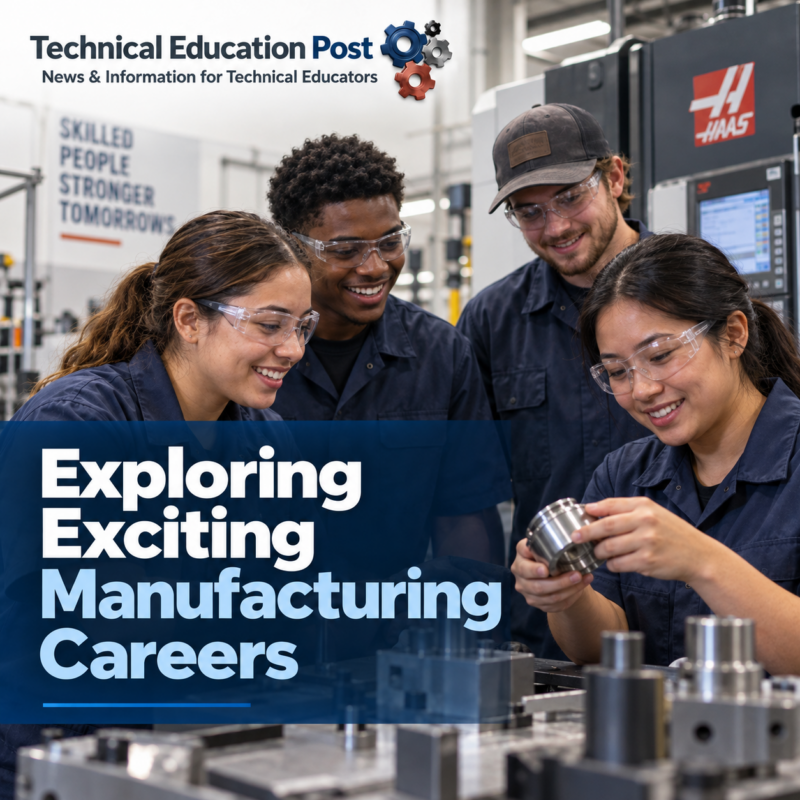
The Future is Forged Here: Exploring Exciting Manufacturing Careers
The image of manufacturing often conjures outdated notions of repetitive, manual labor on crowded factory floors. However, the reality of modern manufacturing is a dynamic, technologically driven landscape brimming with innovation and opportunity. From designing intricate aerospace components to crafting life-saving medical devices, manufacturing is the engine that drives our economy and shapes our daily lives. For students contemplating their future, educators guiding them, career changers seeking a new path, technicians maintaining complex machinery, and seasoned manufacturing professionals looking to advance, understanding the breadth and depth of today’s manufacturing careers is essential. This article delves into the exciting world of manufacturing, demystifying its processes, highlighting its crucial role, and illuminating the diverse and rewarding career trajectories available.
Manufacturing careers are increasingly vital in today’s economy, especially as industries face challenges related to the skilled workforce gap. For a deeper understanding of this issue and its implications for the future of manufacturing jobs, you can read the article titled “The Skilled Workforce Gap” available at this link. This article explores the factors contributing to the shortage of skilled workers and offers insights into potential solutions for bridging the gap in the manufacturing sector.
Understanding the Manufacturing Ecosystem

At its core, manufacturing is the process of transforming raw materials or components into finished goods. It’s a complex interplay of design, engineering, production, quality control, logistics, and management. Far from being a monolithic industry, manufacturing encompasses a vast array of sectors, each with its unique demands and technological advancements.
The Evolution of Production: From Craft to Automation
Historically, manufacturing was largely artisanal, relying on skilled craftspeople and individual ingenuity. The Industrial Revolution brought about mass production, characterized by assembly lines and specialized tasks. Today, we are in an era of Industry 4.0, often referred to as the Fourth Industrial Revolution. This paradigm shift is driven by the integration of digital technologies, automation, artificial intelligence (AI), the Internet of Things (IoT), and advanced data analytics into every facet of the manufacturing process.
Key Pillars of Modern Manufacturing
Several core elements define contemporary manufacturing:
- Advanced Materials: The development and application of novel materials, such as composites, nanomaterials, and advanced alloys, enable the creation of lighter, stronger, and more efficient products. Think of the carbon fiber used in high-performance vehicles or the biocompatible materials in prosthetics.
- Automation and Robotics: Robots are no longer confined to repetitive tasks. Collaborative robots (cobots) work alongside humans, and sophisticated robotic systems handle complex assembly, welding, and inspection with remarkable precision and speed.
- Digitalization and Connectivity: The Industrial Internet of Things (IIoT) connects machines, sensors, and systems, allowing for real-time data collection, monitoring, and control. This connectivity enables predictive maintenance, optimized production scheduling, and enhanced supply chain visibility.
- Additive Manufacturing (3D Printing): This revolutionary technology allows for the creation of three-dimensional objects layer by layer directly from digital designs. It’s transforming prototyping, custom part production, and even mass manufacturing in certain industries.
- Data Analytics and AI: The vast amounts of data generated by connected manufacturing systems are analyzed using AI and machine learning algorithms to identify trends, optimize processes, predict equipment failures, and improve product quality.
The Indispensable Role of Manufacturing in the Economy

Manufacturing is not just about making things; it’s a fundamental driver of economic prosperity, innovation, and national security.
Driving Economic Growth and Innovation
Manufacturing industries are significant contributors to Gross Domestic Product (GDP) and are often at the forefront of technological advancement. Innovations developed in manufacturing settings frequently spill over into other sectors, fostering broader economic development. Companies that excel in manufacturing often