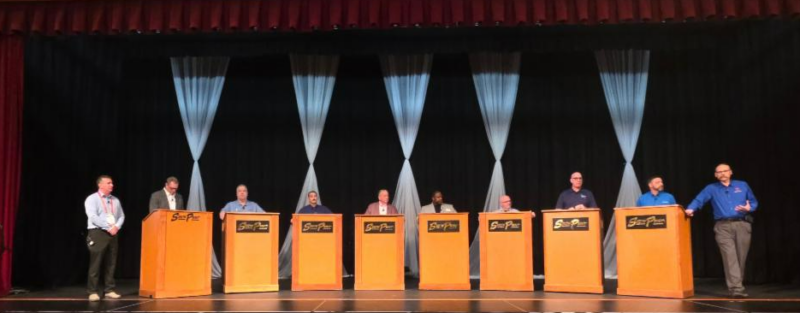
Leading manufacturers representing a majority of HVACR brands took the stage together at the HVAC Excellence National HVACR Education Conference to deliver a clear, unified message: the future of HVACR depends on stronger alignments between manufacturers and education.Organizations representing dozens of brands set aside competition to address a shared challenge, preparing the next generation of technicians. Unified Message from HVACR Manufacturers.
A First of Its Kind Industry Conversation
As several panelists noted, while these companies have operated in the same space for decades, this was the first time they had come together in such an open and collaborative forum. The result was a candid and impactful discussion that strongly resonated with educators, trainers, and industry stakeholders.
“It’s not about making an immediate sale it’s about building a pipeline of qualified technicians in the marketplace. As the number one HVAC manufacturer in the world, we view this as part of our commitment to the industry. We are also extremely proud to be able to provide resources and assistance to those who want and need it.” Jeff Bledsoe, Daikin Comfort Technologies
The response was overwhelmingly positive. More importantly, it sparked a discussion for continued collaboration about how manufacturers can better collaborate with HVACR educational programs.
An Industry Evolving Faster Than Education
One message stood above the rest. The industry is evolving faster than many education programs can keep pace with.
Modern HVACR systems now include inverter driven technology, advanced digital controls, connected diagnostics, and new refrigerants with evolving safety requirements. As a result, many students graduate without sufficient exposure to the equipment they will encounter in the field on day one. This creates immediate and measurable skill and safety gaps.
Fundamentals Still Matter but They Are Not Enough
Despite rapid technological change, manufacturers emphasized that fundamentals remain essential. A strong understanding of airflow, refrigeration, and electrical systems are still the foundation of success. However, short term, accelerated programs, or on-the-job training cannot replace the depth and structure of comprehensive education.
At the same time, high performance heat pumps, inverter driven systems are no longer emerging technologies, they are the standard students need to know on day one.
Should a person first see a R-290 Monobloc Heat Pump
be in a customer’s home, or the classroom?
Where New Technicians Are Struggling
Manufacturers consistently see gaps in new technicians, particularly in diagnostic and troubleshooting ability, electrical fundamentals, system design and application, refrigerant safety, and digital controls literacy. These deficiencies often appear immediately when graduates enter the workforce, reinforcing the need for stronger alignment between education and real-world applications.
Defining the Roles of Education and Industry
A clear distinction emerged during the discussion. Schools are responsible for providing foundational knowledge, and manufacturers are responsible for providing the intricacies of their particular equipment.
A Call for Stronger Partnerships
Ask not what your industry can give to your program, but what your program is willing to invest to prepare the next generation of technicians.
“It is important to recognize that the individuals in attendance are not part of the problem, they are the solution. When manufacturers, educators, and trainers come together, they are not just collaborating; they are making a direct investment in the future of the HVACR industry. Through this partnership, the next generation of technicians is better trained, better prepared, and equipped to meet the evolving demands of the field.” John Davison, General Inc.
One of the clearest lessons from the Manufacturer Educational Summit was this: progress demands understanding on both sides. Too often, educators seek equipment, yet hesitate when the path forward includes the training that brings that equipment to life.
At the heart of the discussion was a shared commitment, a recognition that the future of HVACR depends on stronger partnerships between education and industry.
Manufacturers have made their position clear. They are ready to provide support. Explain why equipment was designed a specific way. Open forum for understanding how to interact with high performance equipment. However, partnership is not a one-sided request for resources…It is a mutual investment.
If we are to prepare students for the technologies of today, and the innovations of tomorrow, then we must meet that commitment with equal resolve. For it is only when education and industry move forward together that we truly serve the future of our workforce.
As systems become more complex, manufacturer led training is no longer optional. It is essential for both educators and technicians.
https://www.escogroup.org/hvac/
https://www.techedmagazine.com/industries/