We came upon some research that we discuss very often in Technical Education, in many of our subjects.A 2010 study by Aviation Week magazine found that, among companies with more than 100,000 workers, 19 percent of employees are now at retirement age. That figure will jump to more than 30 percent in 2012 and nearly 40 percent by 2014, the publication said.
Reality tells us there are no guarantees of America's continued global leadership. Some observances that we must face are:
• American students are losing interest in technical fields, such as engineering and manufacturing, whereas, there is increased interest in technical fields in emerging Asian countries.
• Similar to point one, manufacturing careers have lost their luster and it is up to educators and industry to provide the spark to create interest in this area.
• Much of America is self absorbed with consumption and a sense of entitlement.
Abstract Eastern Michigan University currently offers a BS in Electronics Engineering Technology (BSEET) and a BS in Mechanical Engineering Technology (BSMET) in the School of Engineering Technology. However, many industrial systems are both electrical and mechanical. To that end, EET and MET students must be well educated in electromechanical principles.
The Future of Manufacturing is in the Third GradeDEARBORN, Mich., — the world admires the United States for our education system. Students from China, India, Russia and a host of other countries fill our colleges and universities. However, after degrees and work experience are secured, unless they are offered extraordinary salaries and benefits by technology-based companies, they often return to their respective countries, while the United States continues to report a lack of skilled workers. |


Consider managing a grant for several hundreds of thousands of dollars over a period of 24 months whereby the grant outcomes require articulated and cohesive work to be accomplished by a collaborative party of entities. Who is held accountable? The Feds? The local fiduciary whom awarded the grant? Your boss? You? How about your front line staff? What about the local agencies and partners, cohorts and advocates? What components of the grant are clear and what is vague? Is there a contingency plan and systems in place to manage problems and stave o
$270,000 Gift Creates Walter E. Panse ScholarshipIn the winter of 1974, Walter E. Panse, a Michigan tool and die executive, read an article published in the winter edition of the SME News & Technical Digest, "Tool and Die Men-a People Shortage." He decided he wanted to help and donated $10,000 to the Society of Manufacturing Engineers (SME) Endowment, a very generous first gift to his passion and belief in the importance of U.S. manufacturing. |
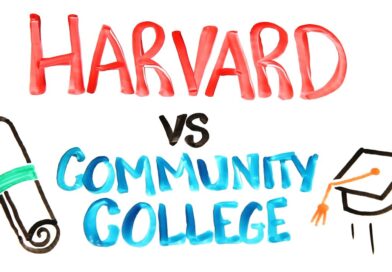
CTE Offers Students OpportunitiesThe June 17 issue of the Economist provides a broad perspective on the values inherent in career and technical education (CTE) courses, stating, “The Council of Economic Advisers projects faster-growing demand for those with a two-year technical-college degree, or specific training, than for those with a full university degree.” The article, “Too narrow, too soon? |
Polk State College Helps Close Manufacturing Skills GapFlorida’s manufacturers faces losing skilled craftspeople to retirement and other local manufacturers because of a limited skilled labor pool in the region. |
Innovative Thinking Leads to Innovative Actions,which result in creative solutions that otherwise might not have derived from a preplanned strategy in a binder on your shelf, or a folder in your computer. |
New Green Academy Program Builds Synergy Among Industry Partners and SchoolsJust launched, ETA International’s Green Academy will be a collaborative effort for both schools that are approved to utilize ETA alternative energy certifications and industry partners who offer training or are looking to hire students.“We hear from schools each day who are entering the alternative energy market and including their lo |
Legal Implications of Safety in Technology EducationIntroduction - Teaching used to be simple. Education consisted of a one-room schoolhouse with a teacher who responded to the educational needs of pupils. Although difficult to manage, students seemed to thrive in this austere setting. Today, education is no longer simple. Students are more sophisticated, life is more complicated, and technology has transformed learning by altering traditional teaching models. |